Exotic Trees
-
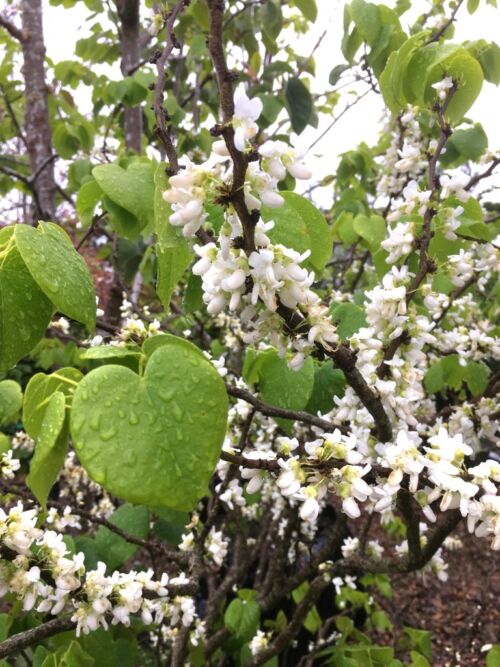
A small round-vase shaped tree with large handsome heart shaped leaves of shining green that turns bright yellow in autumn. A profusion of pure white pea shaped flowers grow on bare branches in spring. A good choice for a smaller garden.
-
A small tree with gracefully cascading tiered branches with large flat lime green leaves. A stunning display of creamy-white flowers in spring followed by clusters of red berries which are attractive to birds. Spectacular red and orange foliage in autumn.
-
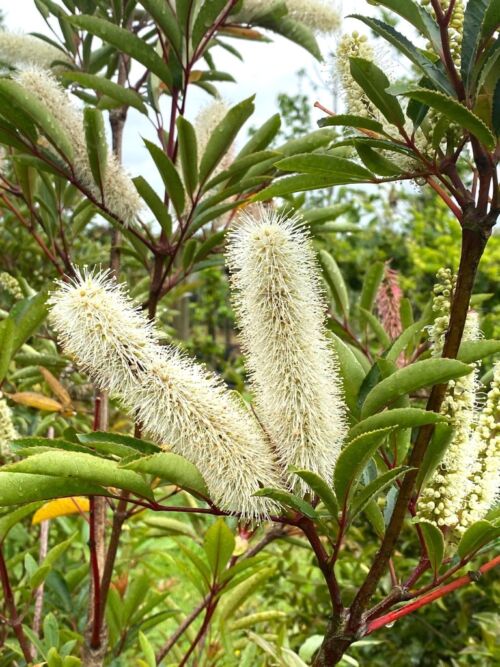
Cunonia capensis, commonly known as Butter Knife Bush, is a compact evergreen tree. Its tropical dark green leaves are accented by reddish stems, while new growth emerges in a striking bronze hue. In late summer, it produces long, showy panicles of scented flowers with a bottlebrush-like appearance. These blooms add vibrant seasonal interest and attract pollinators to the garden. The tree’s name comes from its large stipules, which press together around the growth tip like a butter knife. “Capensis” refers to its origin near the Cape of Good Hope in South Africa. This beautiful tree suits smaller gardens perfectly. It thrives in full sun and prefers well-drained, moist soil. Expect it to reach around 5 metres tall and 3 metres wide.
-
Fagus sylvatica – English Beech is a handsome, deciduous tree with a naturally pyramidal shape. Originating from Southern Europe, it produces glossy green foliage in spring. When young, the leaves are covered with fine silken hairs, and they mature to golden yellows in autumn, creating a striking seasonal display. This tree thrives in well-draining loamy soil, especially when lime is present. It prefers a sunny position, where it grows vigorously and develops into an excellent lawn specimen or shade tree. English Beech reaches approximately 10 x 5 metres. However, it can also be trained into a large screen or woven together to form a formal hedge, offering versatility in landscape design. Interestingly, sylvatica is a Latin adjective meaning “of the woods” or “forest-dwelling.”.
-
- Description
Magnificent, dense, pyramid shaped tree when mature. Leaves often red when first opening, and then as they mature can range from copper-bronze to rich, deep purples. Used for floral work. Ideal lawn specimen or can be trained into a large screen or woven together to form a formal hedge. Height x Width 10 x 4m Height Range Tall 10+m Growth Rate Moderate Plant Type Tree Shape / Habit Pyramidical Country of Origin Southern Europe Similar to Consider Cercis Forest Pansy, Prunus Thundercloud, Fagus Riversii, Acer Tamuke Yama, Fraxinus Raywoodii, Acer Bloodgood. - Leaf
Leaf Colour Copper-Bronze, Purple Deciduous Leaf Colour Copper-Bronze - Flower
Flower Nil - Uses
Specimen Yes Good Shade Tree? Yes Note: Growth, height and grade information are given in good faith but are subject to natural variables beyond our control. -
Fagus sylvatica ‘Riversii’ – Rivers Purple Beech is a striking, round-shaped deciduous tree. Its deep purple-red, almost black leaves have wavy margins and drop cleanly in winter, creating a bold seasonal display. Originally developed in England, this variety was introduced by Thomas Rivers’ nursery around 1860. It remains the darkest of the copper beeches, admired for its dramatic foliage and heritage value. The Riversii Beech thrives in moist, well-drained soil and full sun, which enhances its rich colour. It grows to approximately 10 x 5 metres, making it an excellent shade tree for parks, avenues, and spacious landscapes.
-
Fagus sylvatica 'Dawyck' is a tall, columnar deciduous tree with a distinctly upright habit and moderate growth rate. Over time, its narrow form broadens, adding architectural style to any landscape. In early spring, its vertical branches are cloaked in bright glossy green leaves. As the seasons shift, the foliage transforms into a warm cinnamon brown over autumn. Thanks to its slender profile, 'Dawyck' is ideal for planting where space is limited—whether beside pathways, framing entrances, or standing as bold vertical accents. With origins in Scotland, it brings both heritage and sophistication to gardens and urban settings alike. Typically reaching around 8.0m in height and 2.5m in width, this beech variety is a standout specimen for structured planting schemes or formal avenues.
-
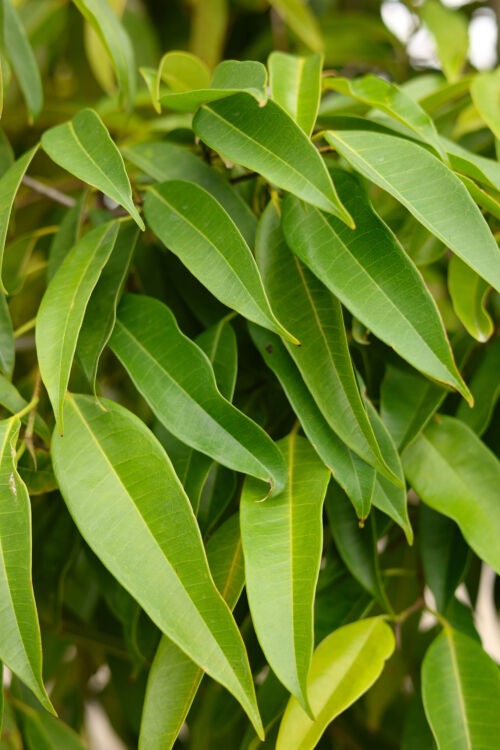
Ficus binnendijkii ‘Amstel Queen’ – Narrow Leafed Fig, is a fast-growing evergreen tree with origins in North Africa. Its long, narrow dark green leaves are tightly packed, creating a graceful weeping effect that adds elegance to any garden. The lush foliage offers a tropical appeal, making it ideal for warm, sheltered outdoor spaces. It prefers moist, well-drained soil and thrives in protected positions. This versatile fig can also be grown in containers, both indoors and outdoors. Indoors, it performs best in a warm, brightly lit room, away from direct sunlight. Whether planted in the garden or kept in a pot, it makes an outstanding shade tree. Typically, it grows to around 7 metres tall and 5 metres wide.
-
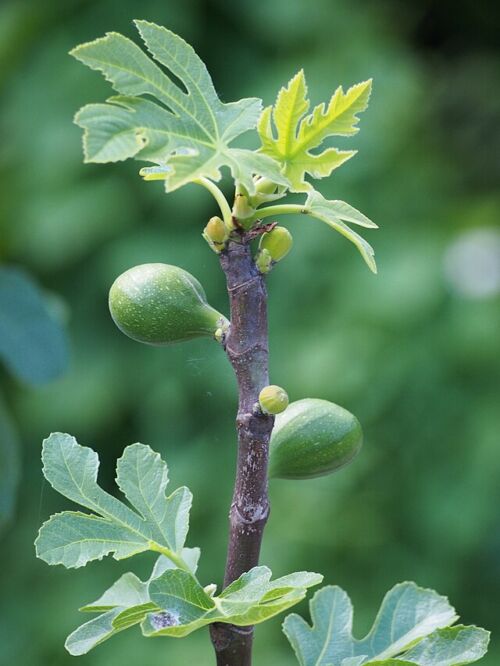
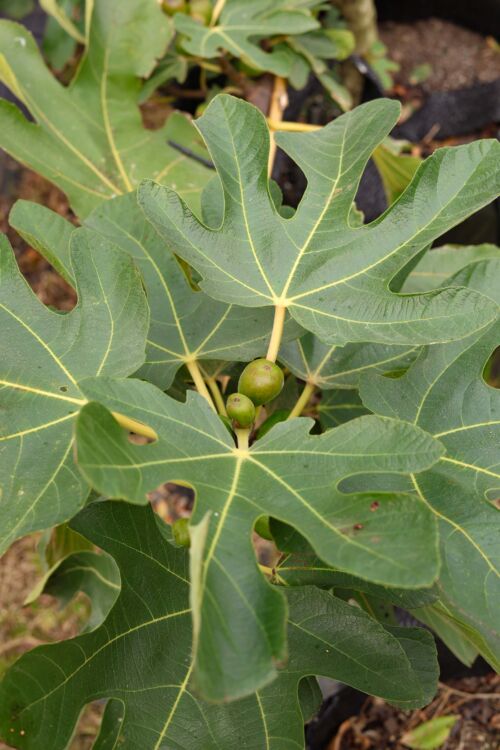
Fig ‘French Sugar (Ficus carica) This compact shrub or small tree features gnarled, twisted branches and bold, tropical-style leaves. Ideally, it should be planted in a sunny, sheltered, location. In addition, it thrives when provided with abundant moisture. Notably, ‘Mrs Williams’ is a well-known hardy selection that produces generous crops of high-quality, large figs. Unlike many other varieties, it ripens earlier in the season, making it a popular choice among gardeners. The fruit is dark green in colour with succulent pale pink flesh. As a heavy cropper, this variety consistently produces abundant yields. As a result, the figs are sweet, juicy, and perfect for both fresh eating and preserving. Typically, the harvest period runs from February to April but be quick to harvest the fruit before the birds do. Because of its compact size, this fig is ideal for small gardens. Moreover, it tolerates coastal conditions with ease, adding to its versatility. Although it can grow up to 5 x 5 metres, it’s easy to trim to your preferred size and shape. Therefore, it’s a versatile choice for many garden styles.
-
Fig ‘Mrs Williams’ (Ficus carica) This deciduous, compact shrub or small tree features gnarled, twisted branches and bold, tropical-style leaves. Ideally, it should be planted in a sunny, sheltered, location. In addition, it thrives when provided with abundant moisture. Notably, ‘Mrs Williams’ is a well-known hardy selection that produces generous crops of high-quality, large figs. Unlike many other varieties, it ripens earlier in the season, making it a popular choice among gardeners. The fruit is dark in colour—sometimes even purple—with flesh ranging from light amber to rich red. As a result, the figs are sweet, juicy, and perfect for fresh eating or preserving. Typically, the harvest period runs from February to April, but be quick to harvest the fruit before the birds do. Because of its compact size, this fig is ideal for small gardens. Moreover, it tolerates coastal conditions with ease, adding to its versatility. Although it can grow up to 5 x 5 metres, it’s easy to trim to your preferred size and shape. Therefore, it’s a versatile choice for many garden styles
-
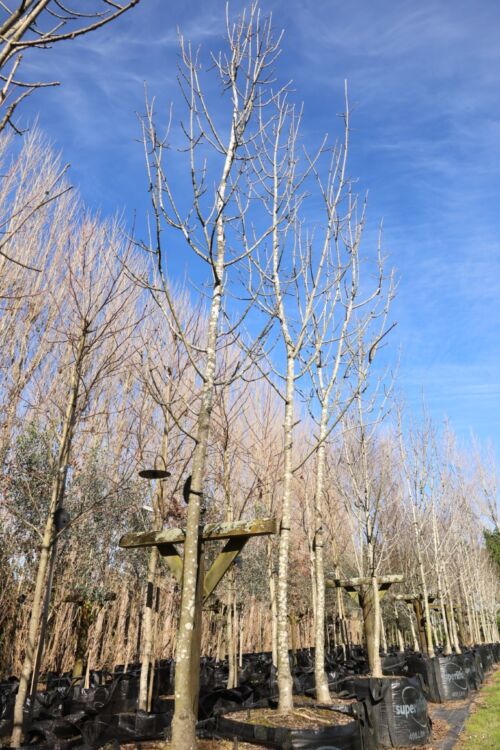
Fraxinus excelsior ‘Purple Spire’, commonly known as Purple Ash, is a deciduous, upright-growing tree with a remarkably even branching structure. Over time, it develops into an oval shape, with a moderate to fast growth rate. Throughout spring and summer, it bears glossy green foliage that transforms into striking shades of purple and orange in autumn, adding seasonal interest. Interestingly, this cultivar was developed in New Zealand, although its Fraxinus parentage traces back to Europe. Ideally, it prefers moist, well-drained soil and will tolerate some wind, making it a resilient choice for various landscapes. As such, it’s excellent for planting along streets, avenues, or long driveways. Typically, it reaches approximately 8 x 4 metres, offering structure and colour without overwhelming smaller spaces. PVR Pending
-
- Description
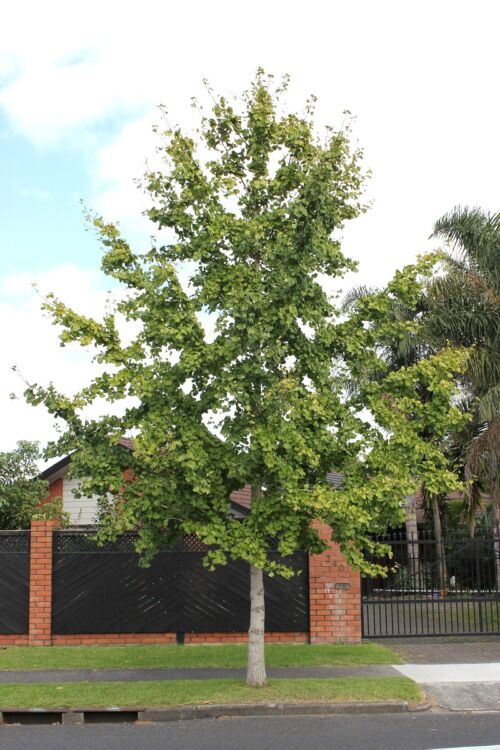
Male clone which does not have any fruits. Forms a pyramidal tree with symmetrical branches and grey corky bark. Broad fan-like leathery light green leaves resembling sections of a maidenhair fern. Spectacular autumn colouring of bright yellow over a long period. Excellent specimen tree. Tolerates clay soil but avoid wet or poorly drained soils. Height x Width 6 x 4 Height Range Medium 5-10m Growth Rate Moderate Plant Type Tree Shape / Habit Pyramidical Country of Origin China Similar to Consider Gleditsia Sunburst, Robinia fresia, Acer Kellys Gold, Acer Kellys Gold, Other Ginkgos - Leaf
Leaf Colour Green Deciduous Leaf Colour Yellow - Flower
Flower Nil - Uses
Specimen Yes Good Shade Tree? Yes Note: Growth, height and grade information are given in good faith but are subject to natural variables beyond our control. -
- Description
A very neat, upright form excellent for confined tight spaces. Bears deep green distinctive maidenhair leaves with golden yellow tones in autumn. 'Fastigiata' is an all-male cultivar. Effective in narrow streets and small home gardens. Can also be kept trimmed for an even neater appearance. Tolerates clay soil but avoid wet or poorly drained soils. Height x Width 7 x 3m Height Range Medium 5-10m Growth Rate Moderate Plant Type Tree Shape / Habit Upright Country of Origin North America Similar to Consider Quercus Robur Fastigiata, Carpinus betulus Fastigiata, Acer Bowhall, Platanus acerifolia pyramidalis. Betula var. Cupressus totem, Olea El Greco, Knightia Excelsa, Poplar crow’s nest. - Leaf
Leaf Colour Green Deciduous Leaf Colour Yellow - Flower
Flower Nil - Uses
Accent Yes Note: Growth, height and grade information are given in good faith but are subject to natural variables beyond our control. -
- Description
Neatly rounded tree with a pretty branch pattern. Lacy double pinnate foliage lime-yellow in spring deepening to fresh green in summer bright yellow in autumn. Successive new growth through summer provides a contrast to the older leaves. Great lawn or specimen tree. Height x Width 6 x 5 Range Medium 5-10m Growth Rate Moderate Plant Type Tree Shape / Habit Umbrella Country of Origin Central North America Similar to Consider Robinia Freesia, Ginkgo, Acer Kellys Gold, Albizzia, Jacaranda - Leaf
Leaf Colour Green yellow Deciduous Leaf Colour Bright yellow - Flower
Flower Insignificant - Uses
Specimen Yes Good Shade Tree? Yes Note: Growth, height and grade information are given in good faith but are subject to natural variables beyond our control. -
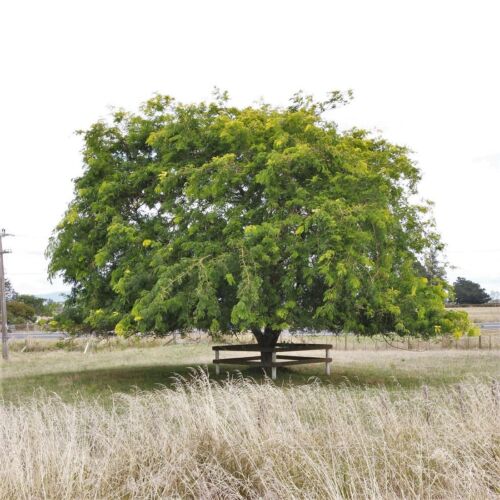
Gleditsia tricanthos ‘Inermis’, commonly known as Thornless Honey Locust, is a smart, spreading deciduous tree that makes an excellent shade choice. Its graceful form adds structure and beauty to any landscape. During summer, the tree is adorned with bright-green, fine-textured leaves. As autumn arrives, these leaves transition to a warm yellow, creating seasonal interest and vibrant contrast. Originating from the United States, ‘Inermis’ thrives in diverse soil conditions. It tolerates compacted, clay, poor-quality, and even drought-prone soils, making it highly adaptable. Furthermore, this tree withstands heat, salt, and harsh urban environments. As an added benefit, it also fixes nitrogen, improving soil health and resilience. Use Thornless Honey Locust as a specimen in a lawn, a recreational shade tree, or a reliable street tree. It grows to approximately 10m tall and 8m wide, yet it can be pruned to suit shape and height. Closely resembling Gleditsia ‘Shademaster’, this thornless variety offers versatility, durability, and elegance for modern landscapes.
-
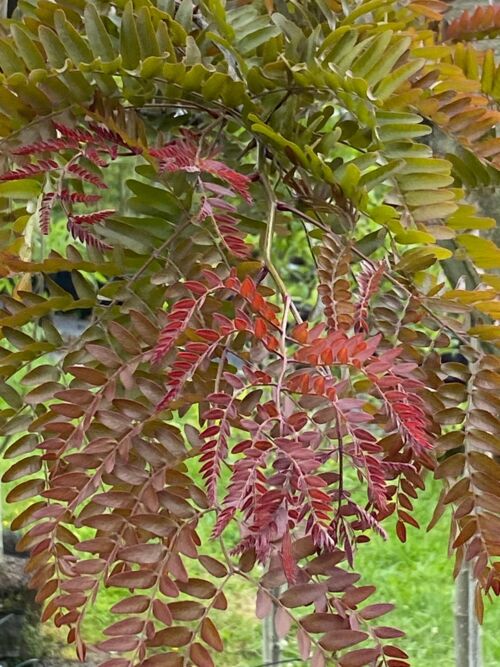
Gleditsia tricanthos ‘Ruby Lace’, also known as Honey Locust, is a graceful deciduous tree. It forms a small, round-headed canopy with elegantly spreading, arching branches that add charm to any garden. In summer, finely divided foliage emerges in a striking purple-red. As the season shifts, the leaves intensify to bronze-red before falling in autumn, creating vibrant seasonal colour. Originating from the United States, ‘Ruby Lace’ adapts well to diverse soil conditions. It tolerates compacted, clay, poor-quality, and drought-prone soils, making it highly resilient. Moreover, this tree withstands heat, salt, and harsh urban environments. As an added benefit, it fixes nitrogen, which improves soil health and supports long-term growth. With its umbrella-shaped crown, ‘Ruby Lace’ makes an excellent shade tree for smaller gardens. Growing to approximately 5m tall and 4m wide, it offers beauty and practicality in compact spaces.
-
Howea forsteriana, commonly known as the Kentia Palm, is an elegant, arching palm with shiny green fronds. Because of their feather-like appearance, these fronds create a graceful silhouette, making this palm one of the most popular choices for both indoor and outdoor settings. As the fronds naturally shed, the slender trunk becomes beautifully ringed. Over time, this adds visual texture and enhances its tropical appeal. Native to Lord Howe Island, it thrives in a range of climates between Australia and New Zealand. Thanks to its slow and steady growth, the Kentia Palm is perfect as a standout feature in tropical gardens. Moreover, it tolerates very low light, coastal exposure, and windy conditions, making it incredibly versatile. When young, it’s important to keep the palm moist and partly shaded. Eventually, it reaches around 5 metres in 10 years and can grow beyond 10 metres at full maturity, offering lasting impact with minimal fuss
-
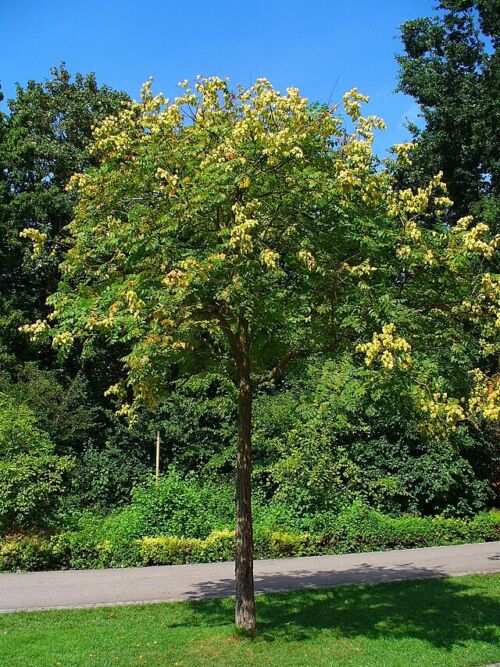
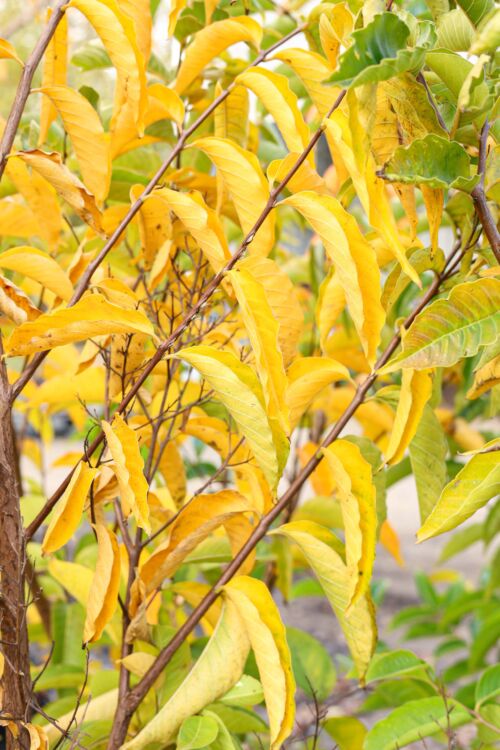
Koelreuteria paniculata, known as the Golden Rain Tree, is a medium‑sized deciduous tree with a broad, spreading canopy. Its long pinnate leaves emerge pinkish in spring, mature to green in summer, and turn a brilliant yellow in autumn. In early summer, elongated panicles of golden‑yellow flowers appear, creating a magnificent display. With origins in China, Korea, and Japan, this tree is hardy once established, tolerating heat, drought, and urban conditions with ease. Highly adaptable, the Golden Rain Tree grows in clay, loam, or sandy soils. Moreover, it can thrive even in nutritionally poor soils, although it will not tolerate waterlogged ground. Compact yet striking, it grows to approximately 5m tall by 4m wide, making it a standout specimen for smaller gardens or feature plantings.
-
Lagerstroemia fauriei ‘Townhouse’, better known as Crepe Myrtle, is a compact deciduous tree with a rounded canopy. Its bark sheds naturally, revealing smooth, trunks and branches that add structure and character. Through summer, the foliage stays deep green before shifting to fiery oranges and yellows in autumn. With a moderate growth rate and clean form, this tree brings style to smaller outdoor spaces. Come summer, ‘Townhouse’ produces large, cone-shaped clusters of white flowers—striking against its dark foliage. While it can handle moderate winds, it performs best in a sheltered spot with moist, well-drained soil. Reaching around 4 metres tall and wide, it’s easy to shape and makes a beautiful specimen tree in a smaller garden layout. Whether you're designing a modern garden or adding structure to a mixed border, ‘Townhouse’ Crepe Myrtle stands out. Its compact size, seasonal colour, and tough nature make it a solid choice for anyone who values form, function, and impact.
-
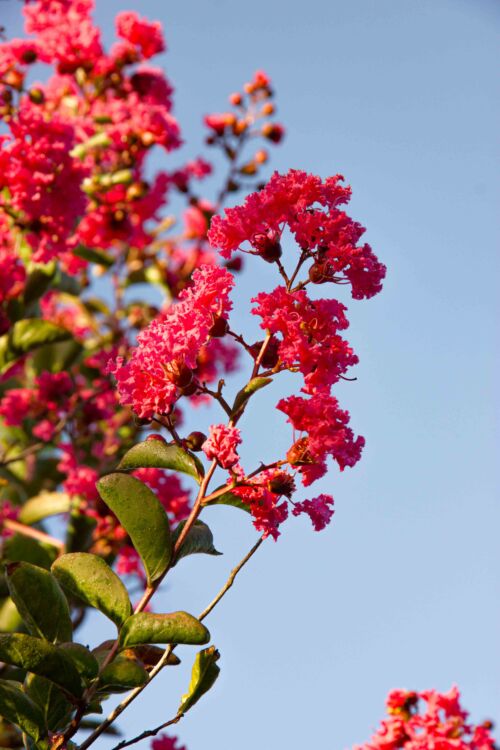
A small deciduous tree which covers itself in ruffled, red crimson , flowers through summer. Lime green leaves over summer turn autumn colours of yellow, gold and red. Smooth shiny bark. Beautiful feature for a small garden.