Exotic Trees
-
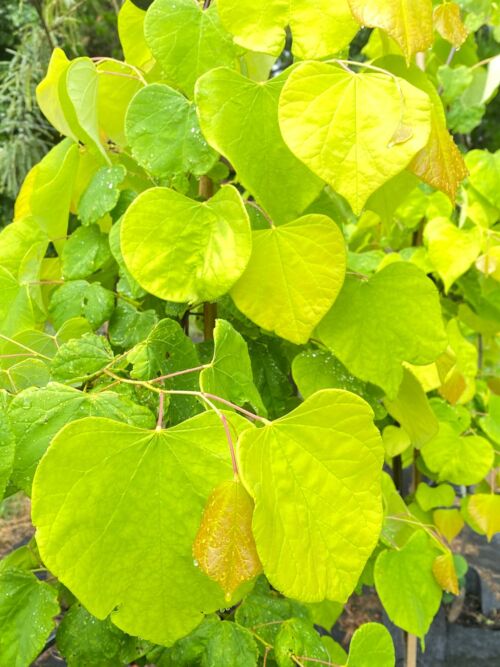
Cercis canadensis 'Hearts of Gold' is a small, deciduous tree with an open, spreading habit that gradually matures into a broad, rounded crown. In early spring, masses of small magenta, pea-like flowers burst into bloom on bare branches, creating a striking display before the foliage emerges. Soon after flowering, golden yellow, heart-shaped leaves appear, adding light and colour to the garden. As autumn approaches, these leaves transition into warm tones of orange and bronze, offering a final flourish before winter. Because of its compact size reaching approximately 3.5 x 3.0 metres, ‘Hearts of Gold’ is an excellent feature tree for smaller gardens or courtyards. It responds well to pruning, making it easy to maintain a tidy shape. Additionally, it tolerates clay soils, although wet or poorly drained conditions should be avoided. For best results, plant in a more sheltered position to protect its delicate foliage. Interestingly, The 'Hearts of Gold' redbud was discovered in 2002 by Jon Roethling in a private garden in Greensboro, North Carolina, United States. It was then propagated and introduced to the market by Hidden Hollow Nursery in Tennessee.
- 3.5 x 3.0m
- Small 1-5m
- Moderate - Fast
- Tree
- Round-Spreading
- Deciduous
- North America
- Yellow
- Oranges and Bronze
- Magenta
- No
- Moist well drained, Tolerates Clay
- Prefers Sheltered
- Small gardens, Courtyards
-
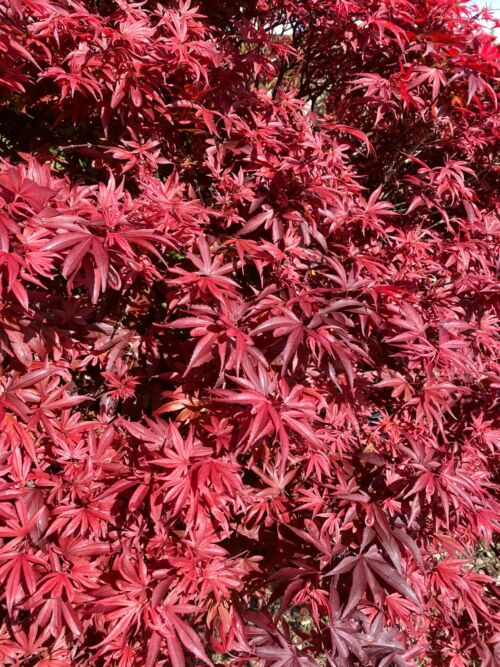
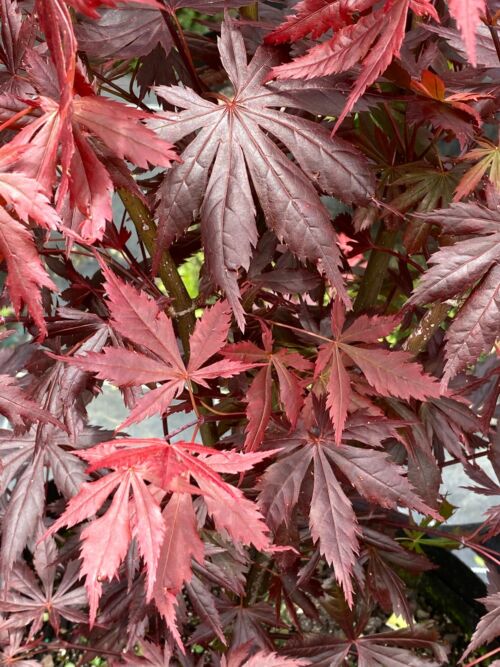
Acer palmatum ‘Shaina’ is a deciduous dwarf maple with a rounded crown and dense, compact growth. Its neat form makes it a striking feature in any garden, while its foliage provides seasonal interest throughout the year. During summer, the leaves display a rich maroon shade. As autumn arrives, they transform into fiery red tones, creating a dramatic display of colour that enhances smaller landscapes and adds warmth to courtyards and patios. ‘Shaina’ thrives in moist, well-drained soil and prefers a sheltered position, away from harsh sun and wind. This ensures healthy growth and protects its delicate foliage from scorch, keeping the tree vibrant and attractive. Originating in the United States, ‘Shaina’ is a mutation of the popular ‘Bloodgood’ cultivar. Its compact size and ease of care make it an excellent choice for smaller gardens, courtyards, or large decorative pots. Growing to approximately 2m high and wide, it is easily trained to shape. With minimal effort, you can maintain its form, making it a versatile and rewarding ornamental tree for modern outdoor spaces.
-
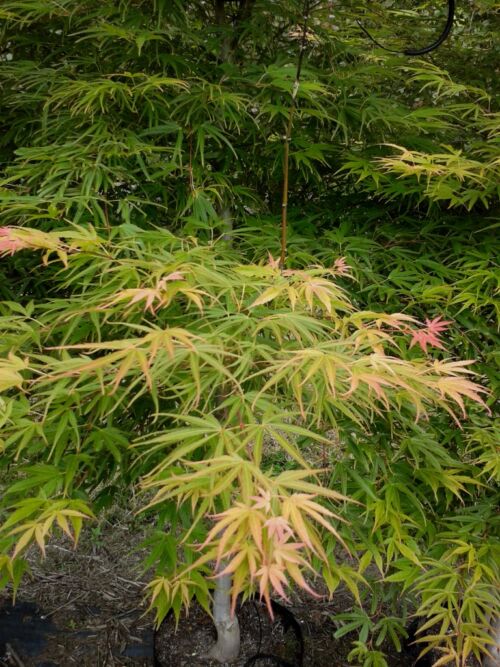
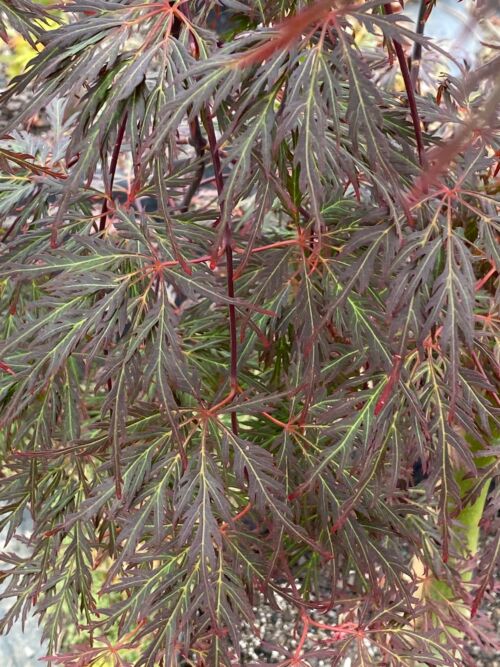
Acer palmatum ‘Scolopendrifolium’ is an elegant deciduous tree originating from Japan. With a strong upright, bushy habit, it creates a graceful presence in the garden. Its long, narrow leaves are bright green, often tipped with soft salmon tones, adding subtle seasonal interest. As autumn arrives, the foliage transforms into striking shades of apricot, orange, and yellow. These vibrant colours provide a stunning display, ensuring the tree becomes a focal point in smaller gardens and courtyards. This maple thrives in moist, well-drained soil and grows happily in sun or semi-shade. However, it benefits from shelter from wind, which helps prevent leaf scorch and keeps the foliage looking fresh throughout the seasons. Reaching approximately 5m high and 3m wide, it makes an ideal light shade tree. With its compact size, it suits modern landscapes and provides a delicate canopy for outdoor spaces. Interestingly, the epithet Scolopendrifolium was chosen by botanists to describe its deeply cut, finger-like leaves. Resembling small insect legs, these unique shapes give the tree its distinctive character and enduring charm.
-
Apple ‘Royal Gala’ Espalier with 3 horizontal levels
Espaliers are a great way to save space, making them ideal for small gardens while still producing abundant fruit. The basic principles of apple espalier involve training branches horizontally along a support and pruning regularly to maintain shape, encourage fruiting spurs, and improve airflow. Pruning is best done in late summer to control growth and in winter to establish structure.- Winter annual Pruning guidelines (Structural Training):
- Focus on shaping the tree.
- Select strong shoots to form horizontal tiers.
- Remove unwanted vertical growth and shorten side shoots to encourage spur formation.
- Summer annual Pruning (Growth Control):
- Best done around December
- Cut back vigorous upright shoots that drain energy but don’t produce fruit.
- Leave short, stubby shoots (spurs), as these are the ones that will bear apples.
-
Apple ‘Fuji’ Espalier with 3 horizontal levels
Espaliers are a great way to save space, making them ideal for small gardens while still producing abundant fruit. The basic principles of apple espalier involve training branches horizontally along a support and pruning regularly to maintain shape, encourage fruiting spurs, and improve airflow. Pruning is best done in late summer to control growth and in winter to establish structure.- Winter annual Pruning guidelines (Structural Training):
- Focus on shaping the tree.
- Select strong shoots to form horizontal tiers.
- Remove unwanted vertical growth and shorten side shoots to encourage spur formation.
- Summer annual Pruning (Growth Control):
- Best done around December
- Cut back vigorous upright shoots that drain energy but don’t produce fruit.
- Leave short, stubby shoots (spurs), as these are the ones that will bear apples.
-
Apple ‘Granny Smith’ Espalier with 3 horizontal levels.
Espaliers are a great way to save space, making them ideal for small gardens while still producing abundant fruit. The basic principles of apple espalier involve training branches horizontally along a support and pruning regularly to maintain shape, encourage fruiting spurs, and improve airflow. Pruning is best done in late summer to control growth and in winter to establish structure.- Winter annual Pruning guidelines (Structural Training):
- Focus on shaping the tree.
- Select strong shoots to form horizontal tiers.
- Remove unwanted vertical growth and shorten side shoots to encourage spur formation.
- Summer annual Pruning (Growth Control):
- Best done around December
- Cut back vigorous upright shoots that drain energy but don’t produce fruit.
- Leave short, stubby shoots (spurs), as these are the ones that will bear apples.
-
Apple 'Braeburn' Espalier with 3 horizontal levels.
Espaliers are a great way to save space, making them ideal for small gardens while still producing abundant fruit. The basic principles of apple espalier involve training branches horizontally along a support and pruning regularly to maintain shape, encourage fruiting spurs, and improve airflow. Pruning is best done in late summer to control growth and in winter to establish structure.- Winter annual Pruning guidelines (Structural Training):
- Focus on shaping the tree.
- Select strong shoots to form horizontal tiers.
- Remove unwanted vertical growth and shorten side shoots to encourage spur formation.
- Summer annual Pruning (Growth Control):
- Best done around December
- Cut back vigorous upright shoots that drain energy but don’t produce fruit.
- Leave short, stubby shoots (spurs), as these are the ones that will bear apples.
-
Apple 'Cox’s Orange' Espalier with 3 horizontal levels.
Espaliers are a great way to save space, making them ideal for small gardens while still producing abundant fruit. The basic principles of apple espalier involve training branches horizontally along a support and pruning regularly to maintain shape, encourage fruiting spurs, and improve airflow. Pruning is best done in late summer to control growth and in winter to establish structure.- Winter annual Pruning guidelines (Structural Training):
- Focus on shaping the tree.
- Select strong shoots to form horizontal tiers.
- Remove unwanted vertical growth and shorten side shoots to encourage spur formation.
- Summer annual Pruning (Growth Control):
- Best done around December
- Cut back vigorous upright shoots that drain energy but don’t produce fruit.
- Leave short, stubby shoots (spurs), as these are the ones that will bear apples.
-
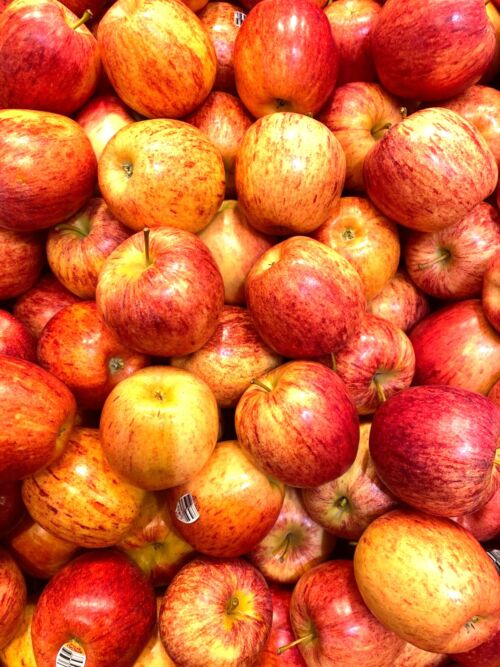
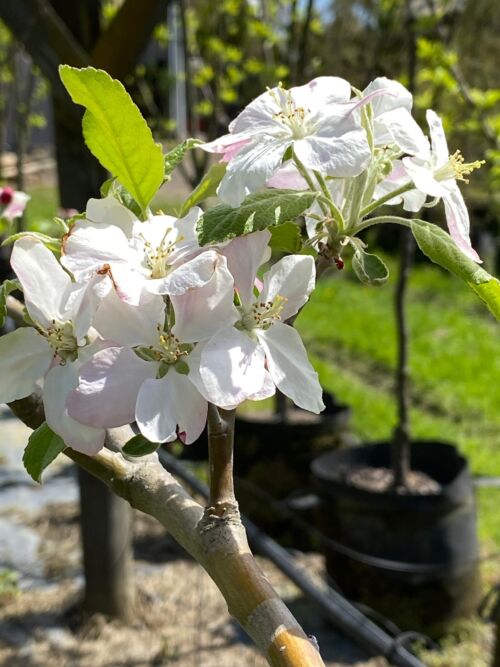
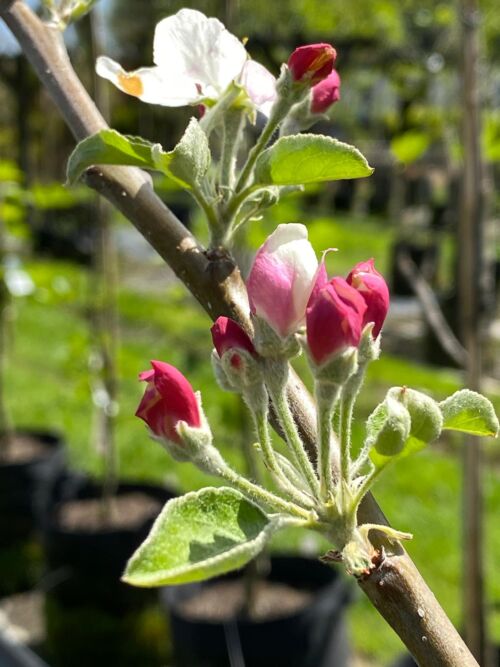
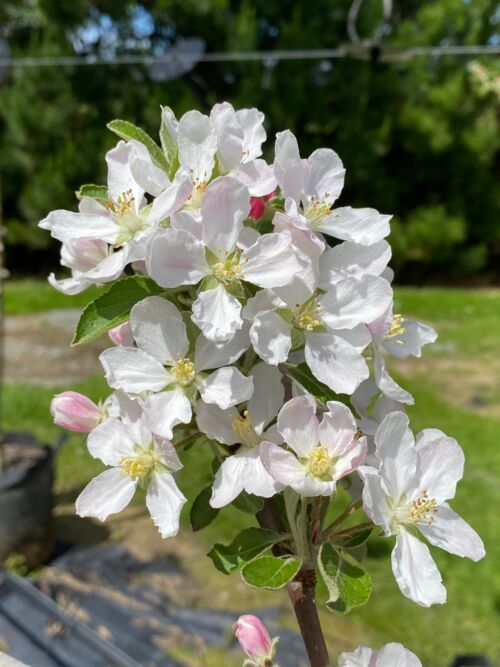
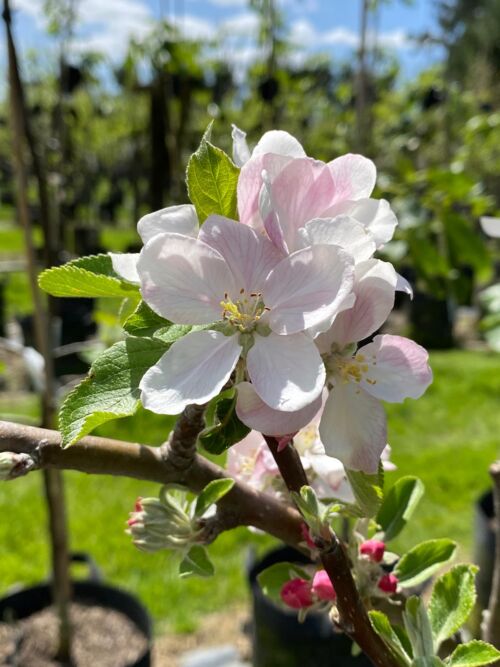
Apple ‘Cox’s Orange’ is a deciduous fruit tree that produces greenish-yellow apples with striking orange-red striping. Widely regarded as one of the finest apples ever grown, it combines beauty with exceptional flavour. In spring, the tree bursts into life with white flowers blushed pink. As summer progresses, the fruit matures until it is ready for harvest between January and February. This heritage variety is prized for its rich, aromatic flesh with a subtle nutty flavour. Its unique taste has made it a favourite among apple enthusiasts for generations. Apple trees thrive in well-drained, fertile soils and prefer a sunny, sheltered position to maximize fruit production. With the right conditions, they grow to a height of 4–5 meters. To ensure healthy growth, provide seasonal feeding and deep watering during dry spells. Additionally, apply mulch to retain moisture and prune annually to shape the tree and encourage abundant fruiting.
-
Pyrus salicifolia ‘Pendula’ – Weeping Silver Pear is a compact, oval-rounded ornamental tree. Its graceful, weeping branches are adorned with willow-like, narrow, silver-gray leaves, creating a striking display in any garden. In spring, the Weeping Silver Paer bursts into life with small, white blossoms that cover the tree. Although part of the pear family, its fruit is tiny, sparsely produced, and inedible. This elegant tree traces its origins back to Germany in the 1850s. Over time, it has become a popular choice for gardeners seeking beauty and adaptability. Silver pears thrive in a wide range of soils, including clay. However, they prefer moderately fertile, moist, well-drained soil in full sun. Additionally, they tolerate light shade, making them versatile for different garden conditions. Interestingly, salicifolia translates to “leaves like a willow,” inspiring its other common name, the Willow-Leaf Pear. Growing to approximately 2 x 2 meters above the graft point, it is perfect for smaller gardens, as a standout specimen tree, planted into your favourite large pot or trimmed into a standard topiary.
-
Acer palmatum dissectum ‘Orangeola’ is a graceful Japanese maple admired for its elegant, weeping branches that cascade to the ground, forming a soft, rounded mound. The name dissectum highlights the finely cut, feathery foliage, which brings a delicate texture to any garden. As seasons change, so does its colour palette. In spring, vibrant green-red leaves create a fiery display. By summer, the foliage shifts to a rich green, offering a refreshing contrast. With autumn’s arrival, ‘Orangeola’ returns to its brilliance, once again glowing with warm orange-red tones. This seasonal transformation ensures year-round interest and beauty in smaller landscapes. Compact in size, reaching about 2.5m high by 2.0m wide, it is ideal for courtyards, container planting, or intimate garden spaces. Moreover, it thrives in moist, well-drained soils and prefers a sheltered position away from harsh sun, strong winds, or prolonged drought.
-
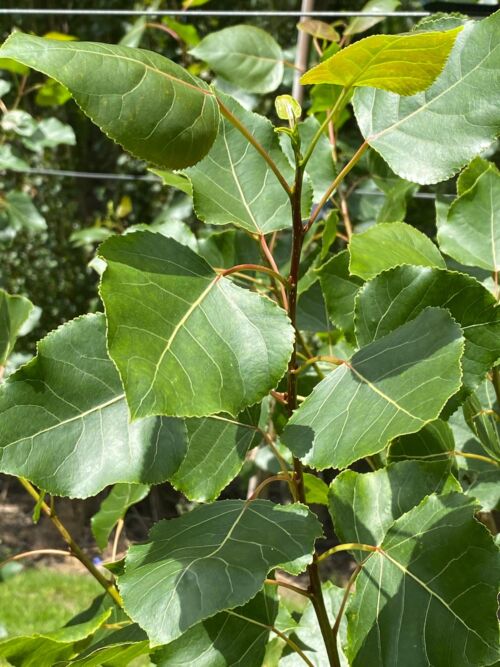
Populus 'Tasman' - Tasman poplar, is a bold and fast-growing deciduous tree with a broadly columnar shape. During summer, its lush green foliage creates a vibrant canopy. Then, as autumn arrives, the leaves turn a brilliant golden yellow—often earlier than other poplar varieties. Not only visually striking, this tree is also highly functional. It performs exceptionally well in erosion control, large shelter belts, and timber production, thanks to its sturdy form and rapid growth. Moreover, Poplar 'Tasman' thrives in windy and wet conditions, making it ideal for exposed or challenging sites. Its resilience adds long-term value to both rural and urban landscapes. Reaching approximately 20 x 15 metres or more, it offers impressive height and presence. Whether for practical use or aesthetic impact, this tree delivers reliable performance and natural beauty.
-
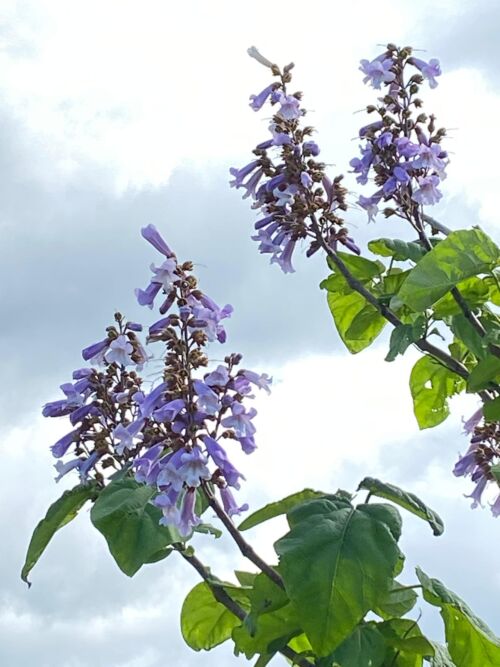
Paulownia tomentosa ‘Princess Tree’, also known as the Empress Tree, is a fast-growing, broad-spreading deciduous tree that instantly adds a tropical feel to any garden. Thanks to its vigorous growth and lush form, it quickly becomes a focal point in both formal and informal landscapes. Its exceptionally large, soft green leaves form a dramatic canopy, making it an excellent choice for shade. Then, in spring, it bursts into bloom with fragrant violet-blue flowers featuring delicate white centres. These stunning blossoms add vibrant colour and a sweet scent, enhancing the overall garden experience. Although it prefers moist, well-drained soil in a sunny, sheltered position, it will also tolerate mild coastal conditions. This adaptability makes it suitable for a wide range of environments. Native to China and South Korea, this majestic tree typically reaches around 8 metres in height and 6 metres in width. As a result, it stands out beautifully in both small and large garden spaces.
-
Acer palmatum ‘Trompenburg’ is a compact, round-headed deciduous tree that adds seasonal colour and structure to any garden. In spring, its rich purple-red, palm-shaped leaves emerge, gradually turning purplish green through summer. By autumn, the foliage transforms into a brilliant crimson, creating a striking display. This cultivar was originally developed at the Trompenburg Arboretum in Rotterdam, Netherlands. It thrives in moist, well-drained soils and prefers a sheltered spot away from harsh wind and direct sun. Thanks to its modest size, it’s perfect for courtyards or smaller garden spaces. Typically reaching around 5 metres tall and 3 metres wide, this shade-loving tree offers year-round interest and elegance.
-
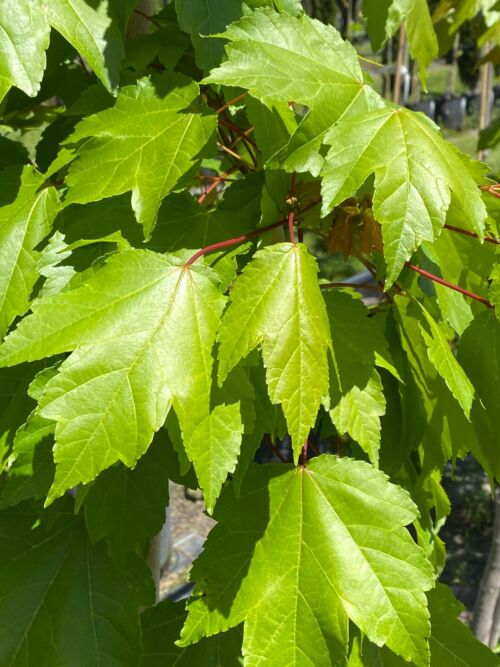
Acer freemanii ‘Autumn Blaze’, also known as the Freeman Maple, is an admired Red Maple cultivar. Its vibrant red foliage in autumn creates a wonderful seasonal display, making it a favourite for landscape designers and homeowners alike. Thanks to its tidy, upright, and compact growth habit, this deciduous tree is ideal as a shade tree in a residential garden or as avenue plantings. Compared to other rubrum varieties, it offers a more manageable size and shape. In early spring, striking red tassel flowers appear in dense clusters before the leaves emerge. These are soon followed by decorative winged seeds, adding further seasonal interest. Moreover, ‘Autumn Blaze’ adapts well to a range of soil conditions, including poor soils. It grows at a medium to fast rate and typically reaches around 12 metres tall and 8 metres wide.
-
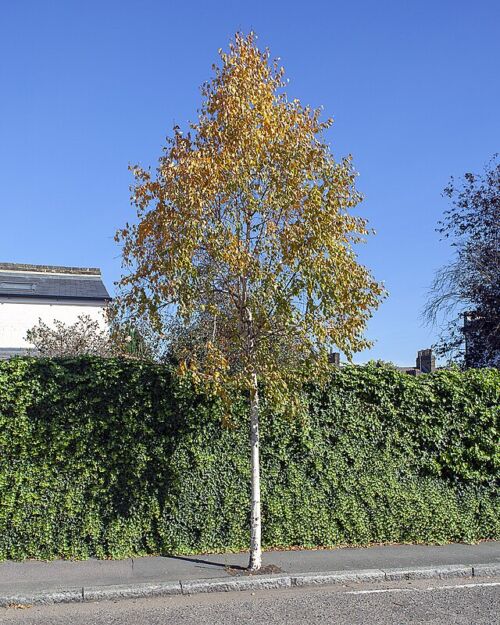
Strong in form, Betula ermanii – Erman’s Birch is a deciduous tree with a naturally neat, conical to pyramidal shape—especially when its central leader is maintained. As the seasons progress, its bark peels away in elegant layers of creamy white or subtly pink-tinged sheets, offering year-round ornamental appeal. Throughout the growing season, its coarsely toothed, ovate leaves remain a deep green. Then, as autumn sets in, they shift to a bold, brilliant yellow, adding vibrant contrast to the landscape. Come spring, yellow-brown male catkins unfurl alongside fresh foliage, marking the tree’s seasonal renewal. Originating from northeast Asia, this species is well-suited to urban environments. Whether used as a stately avenue tree or for light shade, it performs reliably and with distinction. At full maturity, Erman’s Birch can reach heights of up to 15 metres and 6 metres wide, making it a commanding for structured plantings.
- 15 x 6m
- Tall 10+m
- Moderate - Fast
- Tree
- conical to pyramidal
- Northeast Asia
- Betula Jacquemontii, Poplar Crows nest
- Green
- Yellow
- Moist well drained
- Hardy
-
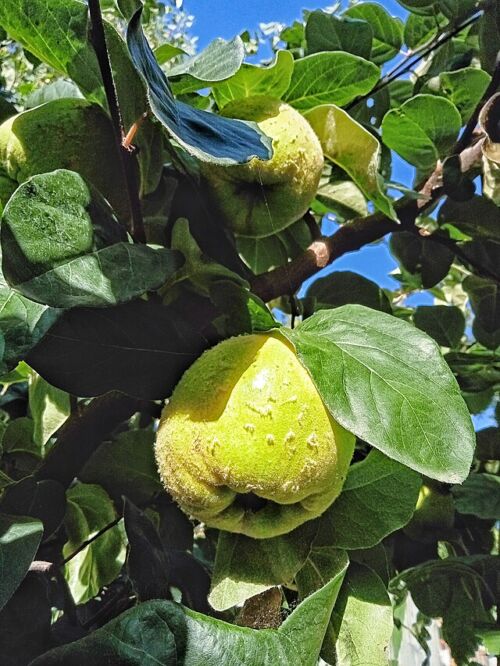
Quince 'Van Deman' is an attractive tree, or multi-stemmed shrub, which features dark green foliage and very showy blossoms in late spring. With its fast growth and elegant form, it quickly becomes a highlight in the garden. The fruit is large, oblong-pear shaped, and bright yellow-orange. Its pale yellow flesh offers a good, spicy flavour. Early ripening and heavy bearing, it proves hardier than many other cultivars, making it a reliable choice for home orchards. Traditionally, quince has been used in marmalades, jellies, and candies. Today, it is also sought after for pastes and other culinary creations. When cooked, the fruit becomes tender and sweet, while its excellent keeping quality ensures long enjoyment. The Van Deman quince was developed in the United States in the 1890s by horticulturist Luther Burbank, who named it after Dr. H.E. Van Deman of the U.S. Department of Agriculture. This variety thrives in deep, fertile, well-draining soil. Self-fertile and harvested around March, it grows to approximately 4m high and wide, offering a manageable size for smaller gardens.
-
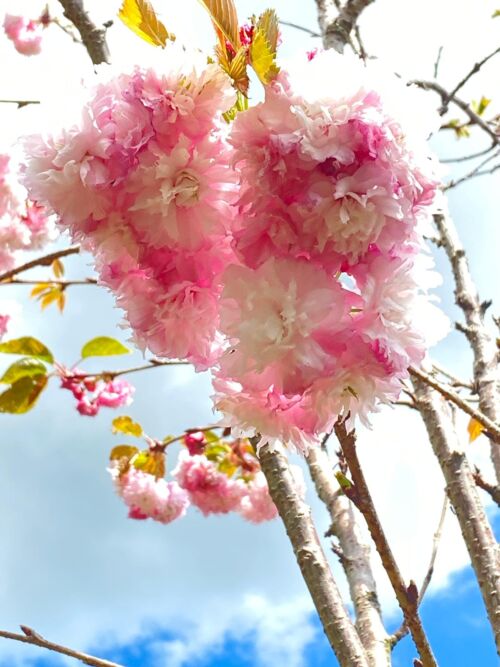
Prunus serrulata ‘Pink Perfection’ is a graceful, deciduous Japanese flowering cherry tree with an elegant upright, vase-like form. Originally selected in the United Kingdom, this ornamental tree offers year-round appeal. Throughout the seasons, its lush green foliage transforms into a breathtaking autumn display of golden yellow, fiery orange, and rich crimson red. Then, as spring arrives, deep pink buds burst into double blossoms of rosy pink which gradually fade to a delicate soft pink, creating a stunning floral show. Ideally, it thrives in moist, well-drained soil and prefers a sunny position. Because of its compact size, growing to approximately 5 x 4 metres, it’s a superb choice for lining avenues, framing pathways, or adding charm to more intimate garden spaces. Whether you're designing a formal landscape or a tranquil retreat, ‘Pink Perfection’ brings elegance, seasonal interest, and timeless beauty to any outdoor setting.
-
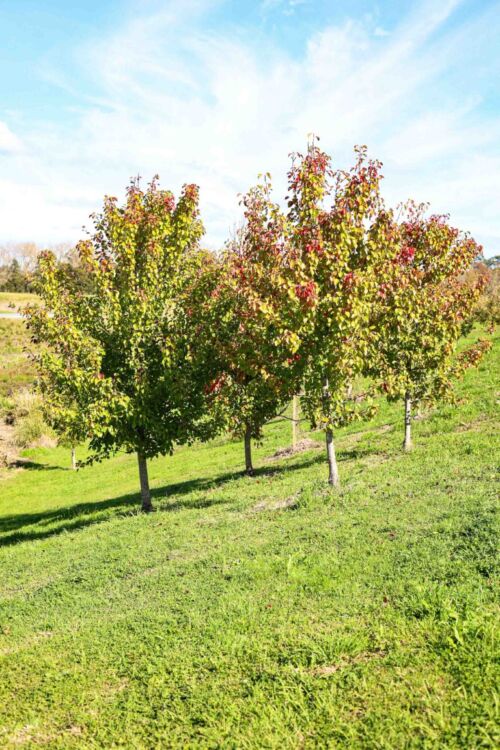
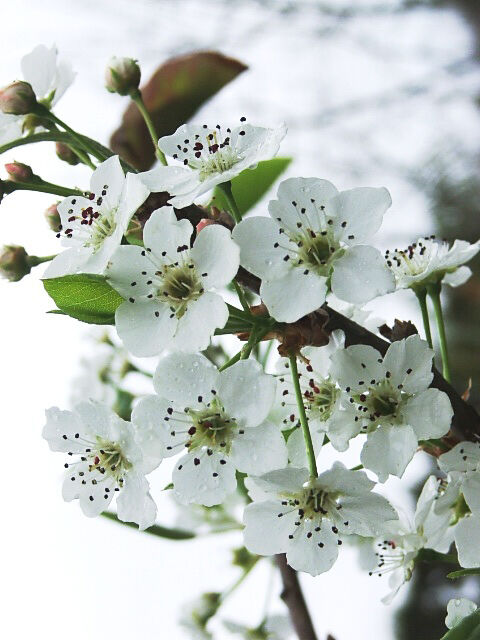
Pyrus calleryana ‘Bradford’, commonly known as the Callery Pear, is a deciduous pyramidal shape tree with origins in China. Its dense branching structure supports glossy dark green leaves through summer, which transform into brilliant shades of red, orange, and maroon in autumn. In early spring, the tree bursts into a profusion of white blossoms, creating a spectacular floral display. This versatile ornamental tree can be trained into standards and is ideal for small gardens, street plantings, or mass landscaping. It tolerates poor drainage but thrives best in moist, well-drained soils. Reaching approximately 7 metres tall and 4 metres wide, Bradford is a beautiful choice for shade, structure, and seasonal interest.
-
A New Zealand Callery Pear variety developed in Christchurch and so being hardier to heavy frost. It forms multi-branched tree with a dense, bushy growth habit. Initially grows in a pyramidal form but later develops a broad vase shaped crown. Glossy green leaves turn bright red/burgundy in autumn. Profusion of white flowers in early spring. Makes an excellent street or avenue tree. Vigorous and hardy.