Exotic Trees
-
Albizia julibrissin, commonly known as the Silk Tree, is a fast-growing, deciduous, compact tree with a wide, spreading canopy. Its delicate, fern-like leaves add a lush texture to any garden. During summer, it bursts into bloom with soft, pink, fluffy flowers that sit gracefully above the foliage. These rounded blossoms resemble silky brushes, creating a striking visual contrast. Although it thrives in hot, dry conditions once established, it prefers moist, well-drained soil. Therefore, regular watering during its early growth phase is beneficial. Interestingly, the name “julibrissin” originates from the Persian phrase gul-i abrisham, meaning “silk flower” or “soft silken threads.” This poetic name reflects the tree’s elegant appearance. Thanks to its umbrella-shaped canopy, the Silk Tree makes an excellent shade tree. It’s ideal for smaller gardens, growing to approximately 5 meters tall and 4 meters wide..
-
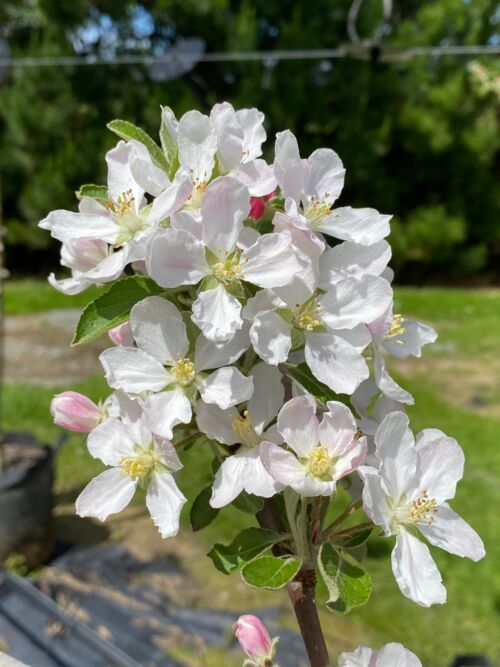
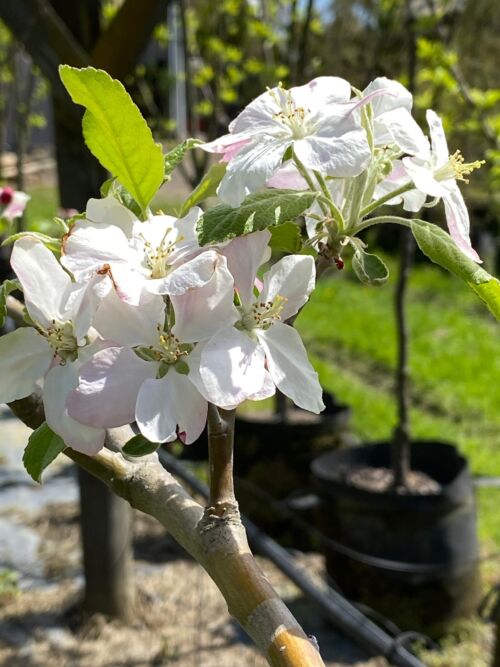
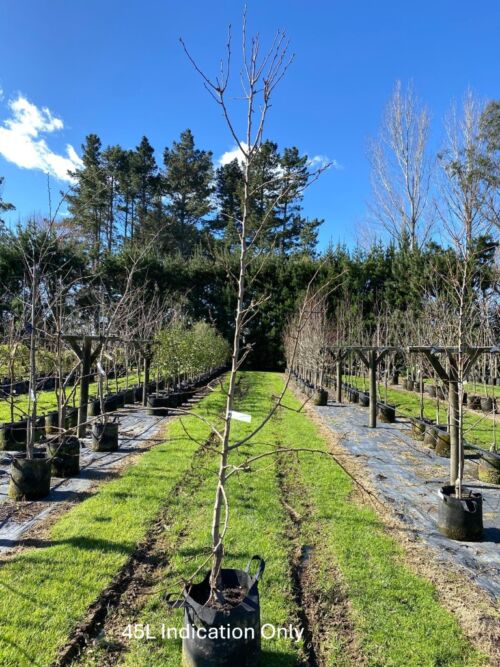
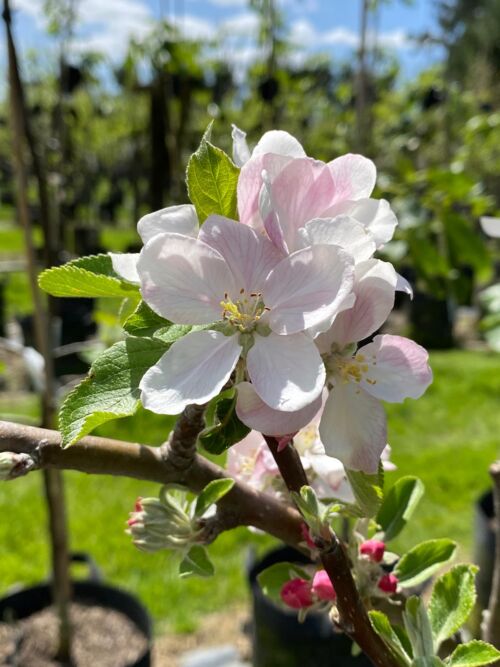
Apple ‘Braeburn’ is a deciduous fruit tree that produces striking apples with red and yellow-striped skin. Originating in New Zealand in 1952 as a chance seedling, it quickly gained recognition for its quality and flavour. In spring, the tree bursts into bloom with clusters of white flowers. As summer advances, the fruit develops until it reaches full ripeness, ready for harvest around May each year. This heritage variety is celebrated for its crisp, juicy white flesh and superb sweet-tart flavour. Its distinctive taste has made it a favourite among apple lovers and continues to delight generations of growers and consumers. Apple trees thrive best in well-drained, fertile soils and prefer a sunny, sheltered position to maximize fruit production. Under ideal conditions, they grow to a height of 4–5 meters, making them suitable for both home gardens and orchards. For healthy growth, provide seasonal feeding and deep watering during dry spells. Moreover, apply mulch to conserve moisture and prune annually to shape the tree, ensuring strong structure and abundant fruiting year after year..
-
Out of stockApple “Fuji”is a deciduous fruit tree that produces vibrant red apples with a yellow base. Originating in Japan during the 1930s, it quickly became a popular variety worldwide. Today, it remains a heritage apple that continues to impress growers and consumers alike. In spring, the tree bursts into life with delicate white flowers blushed with pink. As summer progresses, the fruit steadily matures until it is ready for harvest around May each year. This variety is highly valued for its large, sweet, and crisp apples with fine texture. Moreover, Fuji apples are excellent for eating fresh and store remarkably well, making them a reliable choice for long-term enjoyment. Apple trees thrive in well-drained, fertile soils. Furthermore, they prefer sunny, sheltered positions to maximize fruit production. With the right growing conditions, Fuji trees reach a height of 4–5 meters, making them suitable for both home gardens and orchards. To encourage healthy growth, provide seasonal feeding and deep watering during dry spells. Additionally, apply mulch to retain soil moisture and prune annually. These steps help shape the tree and ensure abundant fruiting year after year.
-
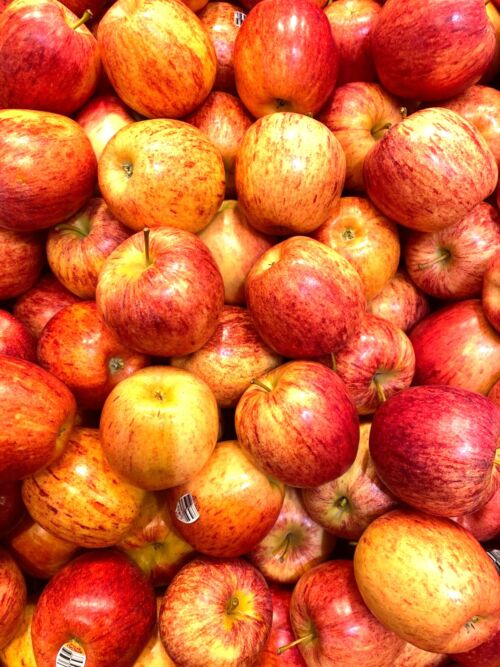
Apple “Royal Gala” is a deciduous fruit tree that produces apples with a striking red stripe over a golden-yellow blush. Originating in New Zealand during the 1930s, it was developed by horticulturist J.H. Kidd as a cross between Kidd's Orange Red and Golden Delicious. Since then, it has become one of the world’s most popular apple varieties. In spring, the tree bursts into life with clusters of white flowers tinged with pink. As summer advances, the fruit steadily develops until it reaches harvest time between February and March each year. This heritage variety is highly prized for its pure white, sweet, and very crisp flesh. Because of its firm texture and refreshing flavour, Royal Gala is a favourite eating apple. Moreover, it is also enjoyed as a versatile dessert apple. Apple trees thrive in well-drained, fertile soils. Furthermore, they prefer sunny, sheltered positions to maximize fruit production. With the right conditions, Royal Gala trees grow to a height of 4–5 meters, making them suitable for both home gardens and orchards. To ensure healthy growth, provide seasonal feeding and deep watering during dry spells. Additionally, apply mulch to retain soil moisture and prune annually. These steps help shape the tree and encourage abundant fruiting year after year.
-
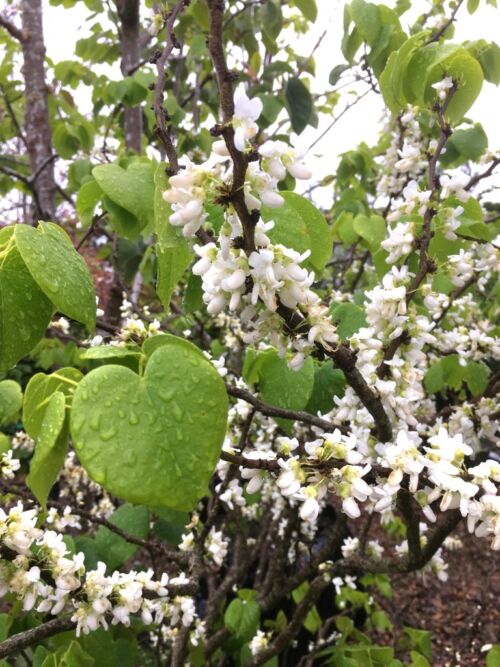
A small round-vase shaped tree with large handsome heart shaped leaves of shining green that turns bright yellow in autumn. A profusion of pure white pea shaped flowers grow on bare branches in spring. A good choice for a smaller garden.
-
A small tree with gracefully cascading tiered branches with large flat lime green leaves. A stunning display of creamy-white flowers in spring followed by clusters of red berries which are attractive to birds. Spectacular red and orange foliage in autumn.
-
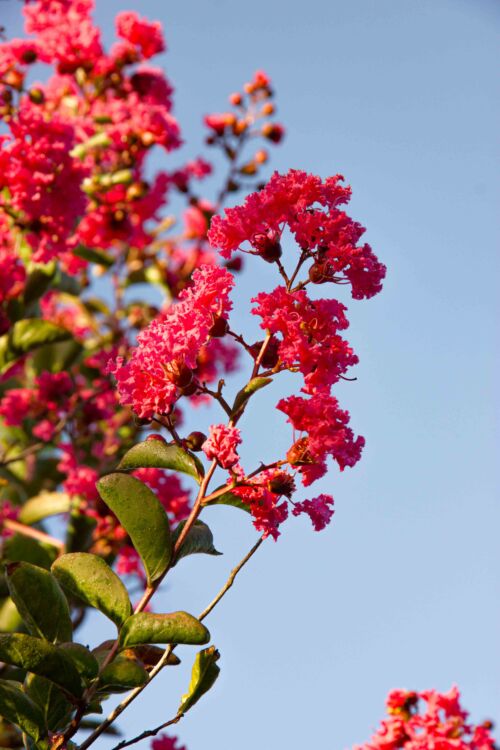
A small deciduous tree which covers itself in ruffled, red crimson , flowers through summer. Lime green leaves over summer turn autumn colours of yellow, gold and red. Smooth shiny bark. Beautiful feature for a small garden.
-
Large long necked, green- yellow fruit, that is ideal for eating and bottling. Harvest is apx Feb March. Branches are more horizontal making it an excellent choice for espaliering. Also known as the Bartlett pear. HERITAGE Pollinators: Beurre Bosc Winter Nelis, Conference, Doyenne du Comice.
-
Apple ‘Cox’s Orange’ is a deciduous fruit tree that produces greenish-yellow apples with striking orange-red striping. Widely regarded as one of the finest apples ever grown, it combines beauty with exceptional flavour. In spring, the tree bursts into life with white flowers blushed pink. As summer progresses, the fruit matures until it is ready for harvest between January and February. This heritage variety is prized for its rich, aromatic flesh with a subtle nutty flavour. Its unique taste has made it a favourite among apple enthusiasts for generations. Apple trees thrive in well-drained, fertile soils and prefer a sunny, sheltered position to maximize fruit production. With the right conditions, they grow to a height of 4–5 meters. To ensure healthy growth, provide seasonal feeding and deep watering during dry spells. Additionally, apply mulch to retain moisture and prune annually to shape the tree and encourage abundant fruiting.
-
Port Wine Magnolia - Michelia figo is a slow-growing, compact shrub that features a rounded shape and vibrant lime-green foliage. In early spring, it bursts into bloom with masses of small, cream-colored flowers streaked with purple, which release a rich fragrance. As a result, it becomes a standout feature in any garden. Depending on light conditions, the shrub’s form can vary. When grown in shade, it tends to develop a looser, more open structure. Conversely, plants grown in full sun are typically more compact and display denser foliage. Moreover, it thrives in humus-rich, well-drained, slightly acidic soil, making it adaptable to a range of garden environments. Whether planted in sun or shade, Port Wine Magnolia performs beautifully. It can be trimmed into a neat, low hedge, allowed to grow as a striking standalone specimen, or placed in a large decorative pot for added versatility. Originating from Western China, this elegant shrub typically reaches up to 3 metres tall and 2.5 metres wide.
-
- Description
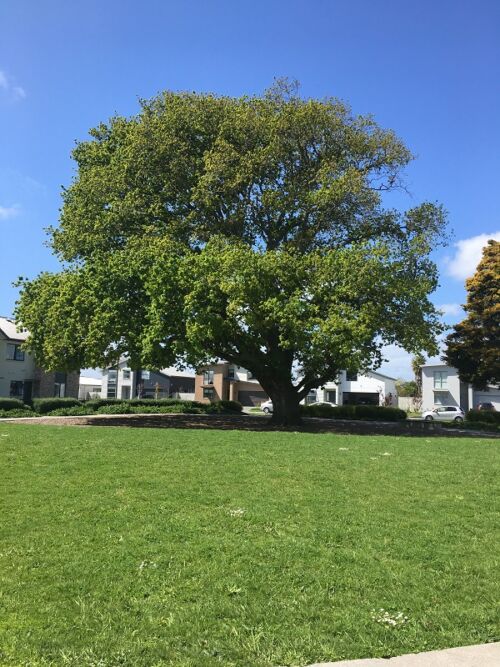
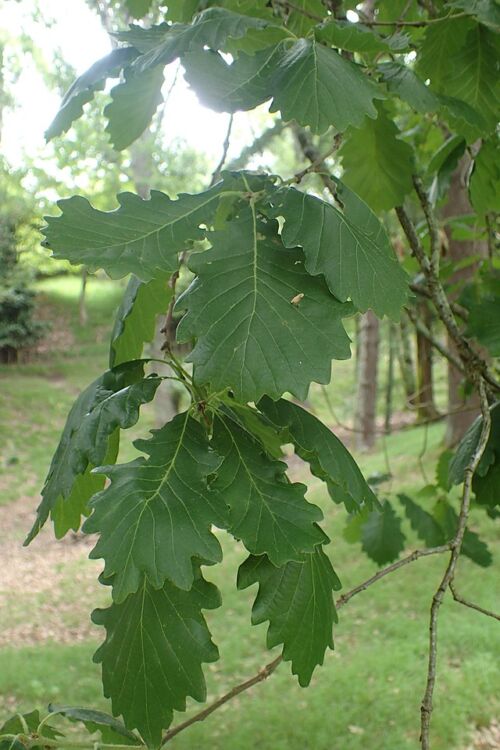
A very large long-lived tree, which develops a broad head of rugged open branches and dark green leaves which turn yellow in autumn. Acorns ripen and fall over autumn. Short, attractive fissured bark. Valuable timber tree of which the heartwood is much in demand for interior and furniture work. Excellent shade tree for parks, reserves, farms and open spaces. Tolerates clay soil but avoid overly wet soils. Grows to apx 10 x 6m in 10yrs. Can attain 30+ at maturity. It is native to most of Europe Height 15 x 9 Range Tall 10+ Growth Rate Moderate Plant Type Tree Shape Round Country of Origin Europe Similar to Consider Q Coccinea, Q Robur fastigiata, Platanus acerifolia - Leaf
Leaf Colour Green Deciduous Leaf Colour Yellow and Golden - Flower
Flower Colour Insignificant - Uses
Specimen Yes Good Shade Tree? Yes Note: Growth, height and grade information are given in good faith but are subject to natural variables beyond our control. -
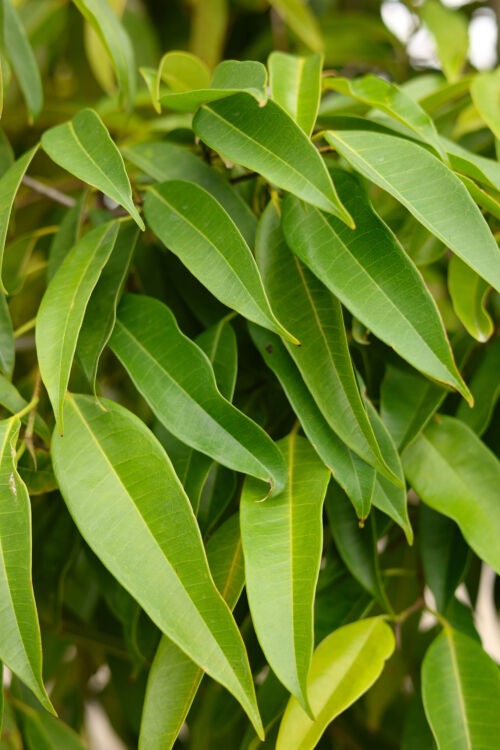
Ficus binnendijkii ‘Amstel Queen’ – Narrow Leafed Fig, is a fast-growing evergreen tree with origins in North Africa. Its long, narrow dark green leaves are tightly packed, creating a graceful weeping effect that adds elegance to any garden. The lush foliage offers a tropical appeal, making it ideal for warm, sheltered outdoor spaces. It prefers moist, well-drained soil and thrives in protected positions. This versatile fig can also be grown in containers, both indoors and outdoors. Indoors, it performs best in a warm, brightly lit room, away from direct sunlight. Whether planted in the garden or kept in a pot, it makes an outstanding shade tree. Typically, it grows to around 7 metres tall and 5 metres wide.
-
Magnolia grandiflora ‘Little Gem’ is a compact evergreen tree originating from the USA. With its rounded form and slower growth, it provides year‑round structure and elegance in the garden. The glossy deep green leaves, highlighted by russet undersides, are typical of grandiflora magnolias. Moreover, creamy white flowers appear freely from an early age, filling the air with fragrance and charm. This magnolia tolerates clay soils; however, avoid overly wet conditions. In addition, it grows to approximately 5m tall by 3m wide but can be pruned easily to maintain shape and height. Because of its size and adaptability, ‘Little Gem’ is excellent for smaller gardens or large pots, offering beauty and versatility in both traditional and modern landscapes
-
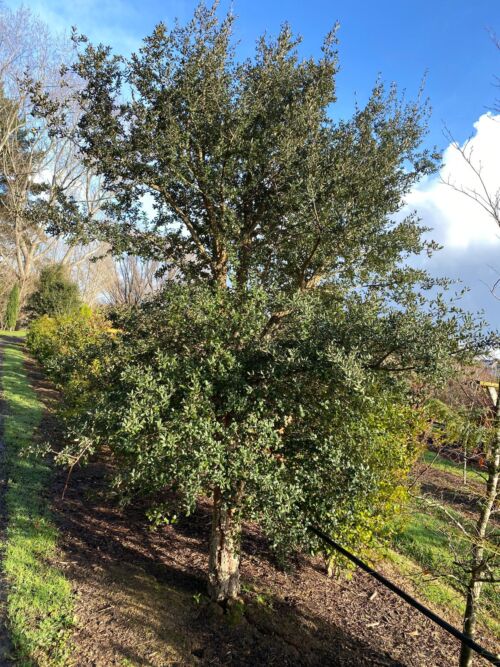
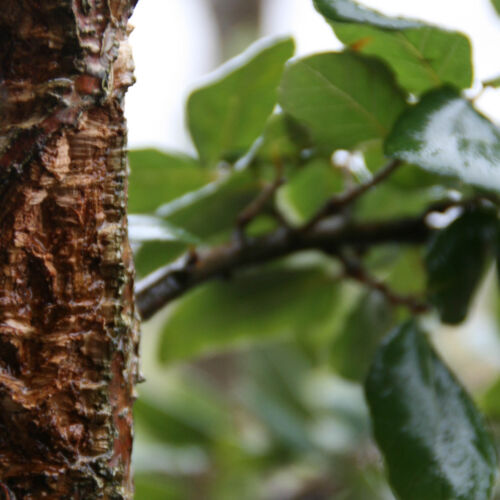
Quercus suber, commonly known as Cork Oak, is a striking evergreen tree native to the Mediterranean region. It grows large with a short stem and wide-spreading canopy, making it a bold feature in any landscape. Notably, its thick, rugged bark is deeply fissured and harvested for cork production. This unique trait makes it both functional and visually captivating. The tree displays a gnarled, spreading habit with dark green, leathery leaves that reveal a grayish underside. As a result, it adds texture and contrast throughout the year. Thriving in warm, dry climates, Cork Oak prefers well-drained soils and shows excellent drought tolerance once established. It can reach over 15 metres at full maturity. Moreover, its dramatic form and historical use make it an excellent conversation piece. Interestingly, the Latin word suber translates to “cork bark.”
-
- Description
Quercus suber, commonly known as the Cork Oak, is an evergreen tree native to the Mediterranean region. Renowned for its thick, rugged, and deeply fissured bark, which is harvested for cork production, this species has a gnarled, spreading habit with dark green, leathery leaves that are grayish underneath. It thrives in warm, dry climates and well-drained soils, showing excellent drought tolerance once established. The Cork Oak supports diverse wildlife, providing acorns for animals and habitat for various species. Long-lived and resilient, it is an iconic tree valued for both its ecological and economic significance, particularly in sustainable cork industries. -
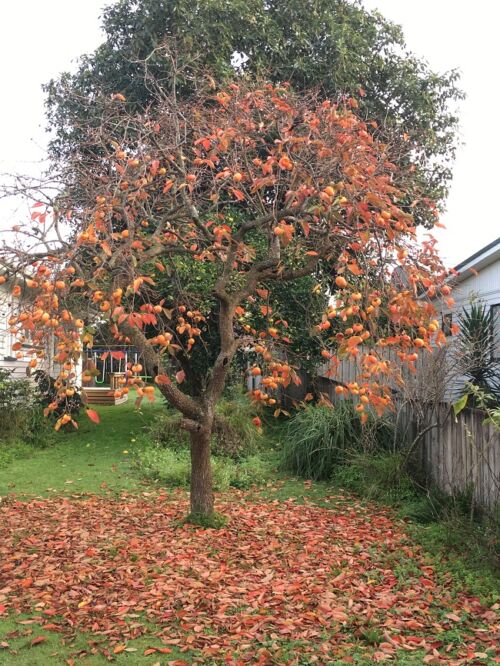
Persimmon ‘Fuyu’ is a deciduous, small, round, spreading tree with large glossy green leaves. In autumn, the foliage transforms into vibrant shades of red, orange, and yellow, creating a striking seasonal display. ‘Fuyu’ is the most popular commercial variety grown. Its medium to large, deep orange fruit is non-astringent, sweet, and of excellent quality. Harvest typically occurs from May to July. The fruit can be eaten fresh like an apple, sliced, dried, or made into jam and chutney. Persimmons prefer moist yet well-drained soil and perform best in full sun. Furthermore, ‘Fuyu’ is self-fertile, making it easy to grow. This variety reaches approximately 5m tall by 4m wide, forming a compact and productive tree. The ‘Fuyu’ persimmon is a Japanese cultivar that originated in China before being introduced to Japan, where it was widely cultivated and admired.
-
Lagerstroemia indica ‘Soir D’ete’ – Crepe Myrtle is a charming small deciduous tree with a vase-shaped form. During summer, its lime-green leaves create a fresh display, before turning to rich autumn shades of yellow and gold. At the same time, ruffled light-pink flowers cover the tree in abundance, producing a truly spectacular sight throughout the warmer months. In addition, its smooth, shiny bark adds year-round interest. This variety thrives best in moist, well-drained soil and full sun, which ensures maximum flower production. Moreover, it makes a beautiful feature in a sheltered small garden. Growing to approximately 4 x 3 metres, it can also be easily trimmed to suit your desired shape and size, offering both flexibility and elegance
-
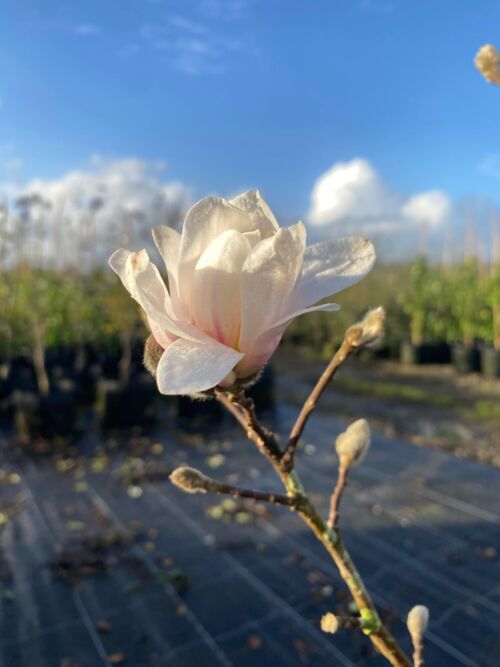
A compact, multi branched shrub or small tree with lime green leaves turning golden in autumn. Soft fluffy buds open to flowers slightly larger than normal stellata and has more numerous long petals (sometimes to 36). They are also less floppy, resulting in a waterlily-like appearance (hence the cultivar name). Long lasting from apx late July. Ideal for the smaller garden.
-
A large, broadly spreading oak on a short stout trunk with large dark green leaves. Semi evergreen in warmer climates. Tolerates exposed sites, heat and drier conditions. Adapts to most soils, even heavy clays. Grows to apx 10 x 6m in 10 years, at maturity can reach between 25 x 25m. Good acorn production.
-
Handsome, wide spreading deciduous tree. Rich green oblong lobed leaves turn yellow in autumn. Dry tolerant once established. Coastal-hardy and withstands exposed areas. Produces large crops of acorns. Grows to apx 10 x 6m in 10 yrs, matures to apx 25 x 14m