Exotic Trees
-
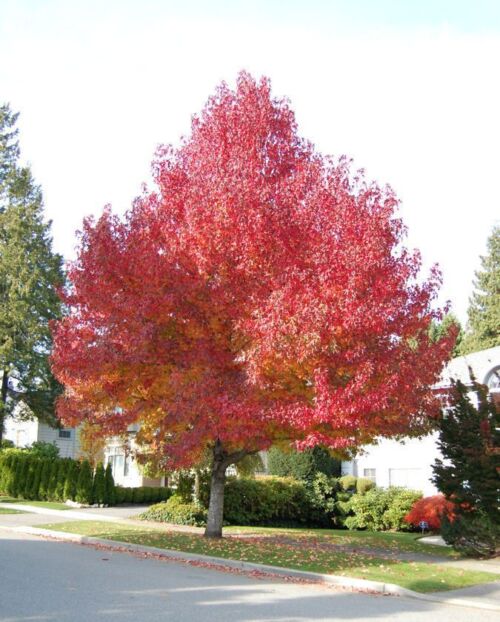
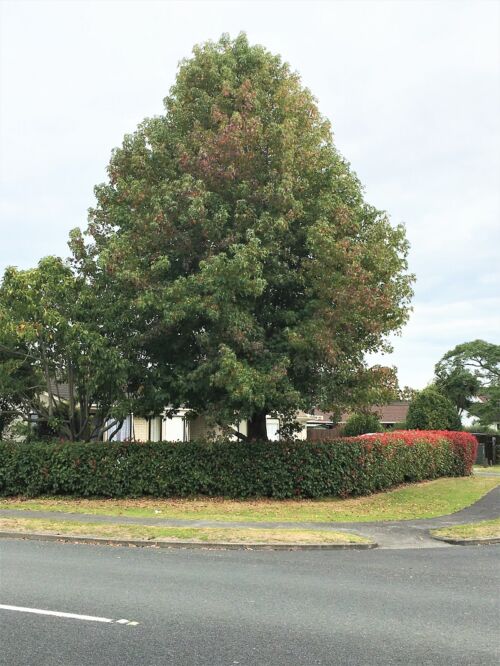
Acer freemanii ‘Jeffers Red’ – Freeman Maple: This fast-growing, upright deciduous tree features strong ascending branches and a dense, broad-oval crown. Its rich green summer foliage transforms into brilliant red in autumn, creating a stunning seasonal display. It thrives in moist, well-drained soil but adapts to clay, poor, wet, or dry conditions. More wind-tolerant than other maples. Ideal as a specimen or avenue tree, it reaches approximately 10m tall by 5m wide.
-
Acer negundo ‘Kellys Gold’ brings a burst of seasonal brilliance to any garden. This standout deciduous tree is admired for its vibrant foliage and fast growth, making it a striking feature in smaller landscapes. New leaves emerge in a bold butter-yellow, gradually softening to fresh lime-green through summer. As autumn arrives, the foliage shifts back to glowing yellows, ensuring year-round interest and colour. Originating in New Zealand, Kellys Gold is a smart alternative to Ulmus species, which are restricted in Auckland due to Dutch Elm Disease. It reaches around 6m tall by 4m wide but responds well to pruning, allowing easy shaping and maintenance. This versatility makes it ideal for small gardens and urban spaces seeking canopy cover. It creates cool, inviting outdoor areas while thriving in clay soils. However, it prefers well-drained conditions, so avoid overly wet or poorly drained sites.
-
With its origins in North America, Acer palmatum ‘Bloodgood’ is a compact, upright, deciduous tree that matures into a more rounded form. Its striking blackish-red stems support the deepest purple-red foliage, which remains vibrant throughout the summer months. As autumn arrives, the leaves blaze into fiery red tones, accompanied by decorative seed capsules that add seasonal interest. Acer Bloodgood thrives in moist, well-drained soil and benefits from a sheltered position. Approximate size at maturity being only 5 x 3m, it makes it perfect as a standout feature tree in a smaller garden or courtyard.
-
Acer palmatum - Japanese Maple, is a deciduous ornamental tree admired for its form and vibrant seasonal colour. Summer sees fresh green foliage transform into a display of oranges, reds, and yellows in autumn. Originating from Japan, Acer Palmatum is best planted in a sheltered spot away from strong winds to protect its delicate leaves. Its compact size and elegant structure make it a versatile choice for a wide range of garden styles—from traditional to contemporary. Ideal as a shade tree for smaller gardens, the Japanese Maple typically reaches around 5 metres tall and 4 metres wide, offering year-round visual interest and appeal.
-
Albizia julibrissin, commonly known as the Silk Tree, is a fast-growing, deciduous, compact tree with a wide, spreading canopy. Its delicate, fern-like leaves add a lush texture to any garden. During summer, it bursts into bloom with soft, pink, fluffy flowers that sit gracefully above the foliage. These rounded blossoms resemble silky brushes, creating a striking visual contrast. Although it thrives in hot, dry conditions once established, it prefers moist, well-drained soil. Therefore, regular watering during its early growth phase is beneficial. Interestingly, the name “julibrissin” originates from the Persian phrase gul-i abrisham, meaning “silk flower” or “soft silken threads.” This poetic name reflects the tree’s elegant appearance. Thanks to its umbrella-shaped canopy, the Silk Tree makes an excellent shade tree. It’s ideal for smaller gardens, growing to approximately 5 meters tall and 4 meters wide..
-
Bold and architectural, Betula utilis 'Jacquemontii' or the Himalayan Birch is a medium-sized deciduous tree known for its upright form that gradually matures into a broad oval silhouette. Originating from the rugged terrains of China and the Himalayas, this fast-growing variety commands attention with its striking, powdery-white bark—a signature feature that sets it apart in any landscape. Throughout summer, its dark green foliage offers a rich contrast to the luminous trunk, before shifting to warm yellow hues in autumn, adding seasonal interest. Whether planted in structured avenues or grouped for visual impact, this birch delivers a refined yet natural presence. Additionally, it responds well to topping, allowing for the creation of standard-type trees where desired. Typically reaching approximately 7 metres in height and 3 metres in spread, Betula 'Jacquemontii' is a standout choice for those seeking elegance with a touch of rugged charm. Utilis = Useful
-
Carpinus betulus 'Fastigiata', commonly known as Upright Hornbeam, is a deciduous tree with a narrow, columnar form that gradually broadens as it matures. This refined cultivar of the European Hornbeam remains in its tight form making it ideal for structured landscapes, offering both formality and seasonal interest. During summer, its oval, ribbed green leaves create a lush canopy. As autumn arrives, the foliage transitions into warm shades of yellow and orange, eventually turning brown and remaining on the tree well into winter adding texture and colour even in the colder months. Moreover, this tree thrives in moist, well-drained soil and prefers a sunny position. Thanks to its upright habit and tolerance for close planting, it makes an excellent choice for street planting, avenues, or as a screen. Reaching approximately 8 metres tall and 3 metres wide, The Upright Hornbeam is a versatile and low-maintenance option for both urban and rural settings.
-
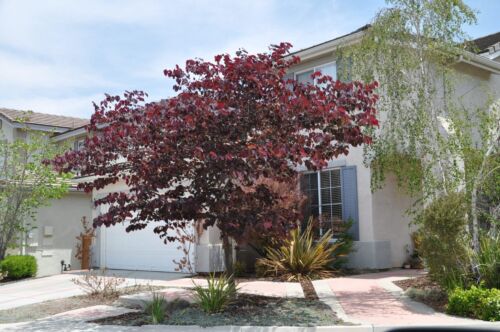
Cercis canadensis 'Forest Pansy' is a small, deciduous tree with an open, spreading habit that gradually matures into a broad, rounded crown. In early spring, masses of small magenta, pea-like flowers burst into bloom on bare branches, creating a striking display before the foliage emerges. Soon after flowering, rich purple-red, heart-shaped leaves appear, adding depth and colour to the garden. As autumn approaches, these leaves transition into warm tones of orange and bronze, offering a final flourish before winter. Because of its compact size reaching approximately 3.5 x 3.0 metres, ‘Forest Pansy’ is an excellent feature tree for smaller gardens or courtyards. It responds well to pruning, making it easy to maintain a tidy shape. Additionally, it tolerates clay soils, although wet or poorly drained conditions should be avoided. For best results, plant in a more sheltered position to protect its delicate foliage. Interestingly, this tree originates from North America, and its Latin name canadensis fittingly means “of Canada” or “from Canada.” Whether you're designing a colourful garden or seeking a low-maintenance ornamental tree, ‘Forest Pansy’ delivers beauty across all seasons.
- 3.5 x 3.0m
- Small 1-5m
- Moderate - Fast
- Tree
- Round-Spreading
- Deciduous
- North America
- Prunus Thundercloud, Fagus Riversii, Fagus Sylv Purp, Acer Tamukeyama, Fraxinus Raywoodii, Acer Bloodgood.
- Purple-Red
- Oranges and Bronze
- Magenta
- No
- Moist well drained, Tolerates Clay
- Prefers Sheltered
- Small gardens, Courtyards
-
- Description
Magnificent, dense, pyramid shaped tree when mature. Leaves often red when first opening, and then as they mature can range from copper-bronze to rich, deep purples. Used for floral work. Ideal lawn specimen or can be trained into a large screen or woven together to form a formal hedge. Height x Width 10 x 4m Height Range Tall 10+m Growth Rate Moderate Plant Type Tree Shape / Habit Pyramidical Country of Origin Southern Europe Similar to Consider Cercis Forest Pansy, Prunus Thundercloud, Fagus Riversii, Acer Tamuke Yama, Fraxinus Raywoodii, Acer Bloodgood. - Leaf
Leaf Colour Copper-Bronze, Purple Deciduous Leaf Colour Copper-Bronze - Flower
Flower Nil - Uses
Specimen Yes Good Shade Tree? Yes Note: Growth, height and grade information are given in good faith but are subject to natural variables beyond our control. -
Fagus sylvatica – English Beech is a handsome, deciduous tree with a naturally pyramidal shape. Originating from Southern Europe, it produces glossy green foliage in spring. When young, the leaves are covered with fine silken hairs, and they mature to golden yellows in autumn, creating a striking seasonal display. This tree thrives in well-draining loamy soil, especially when lime is present. It prefers a sunny position, where it grows vigorously and develops into an excellent lawn specimen or shade tree. English Beech reaches approximately 10 x 5 metres. However, it can also be trained into a large screen or woven together to form a formal hedge, offering versatility in landscape design. Interestingly, sylvatica is a Latin adjective meaning “of the woods” or “forest-dwelling.”.
-
- Description
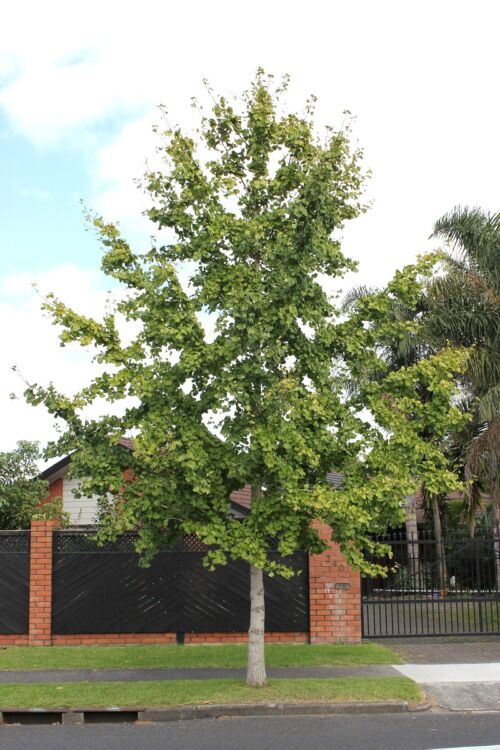
Male clone which does not have any fruits. Forms a pyramidal tree with symmetrical branches and grey corky bark. Broad fan-like leathery light green leaves resembling sections of a maidenhair fern. Spectacular autumn colouring of bright yellow over a long period. Excellent specimen tree. Tolerates clay soil but avoid wet or poorly drained soils. Height x Width 6 x 4 Height Range Medium 5-10m Growth Rate Moderate Plant Type Tree Shape / Habit Pyramidical Country of Origin China Similar to Consider Gleditsia Sunburst, Robinia fresia, Acer Kellys Gold, Acer Kellys Gold, Other Ginkgos - Leaf
Leaf Colour Green Deciduous Leaf Colour Yellow - Flower
Flower Nil - Uses
Specimen Yes Good Shade Tree? Yes Note: Growth, height and grade information are given in good faith but are subject to natural variables beyond our control. -
- Description
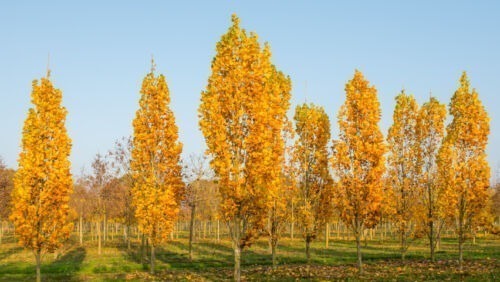
A very neat, upright form excellent for confined tight spaces. Bears deep green distinctive maidenhair leaves with golden yellow tones in autumn. 'Fastigiata' is an all-male cultivar. Effective in narrow streets and small home gardens. Can also be kept trimmed for an even neater appearance. Tolerates clay soil but avoid wet or poorly drained soils. Height x Width 7 x 3m Height Range Medium 5-10m Growth Rate Moderate Plant Type Tree Shape / Habit Upright Country of Origin North America Similar to Consider Quercus Robur Fastigiata, Carpinus betulus Fastigiata, Acer Bowhall, Platanus acerifolia pyramidalis. Betula var. Cupressus totem, Olea El Greco, Knightia Excelsa, Poplar crow’s nest. - Leaf
Leaf Colour Green Deciduous Leaf Colour Yellow - Flower
Flower Nil - Uses
Accent Yes Note: Growth, height and grade information are given in good faith but are subject to natural variables beyond our control. -
- Description
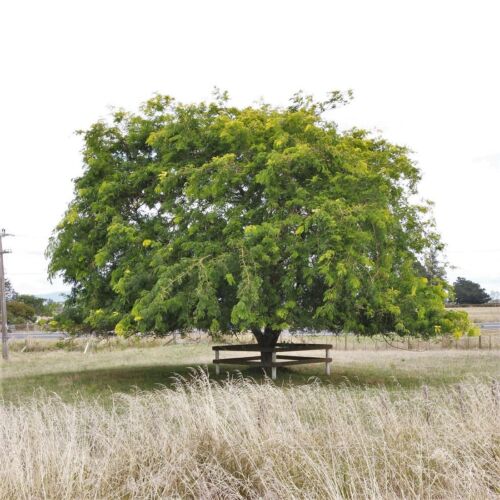
Neatly rounded tree with a pretty branch pattern. Lacy double pinnate foliage lime-yellow in spring deepening to fresh green in summer bright yellow in autumn. Successive new growth through summer provides a contrast to the older leaves. Great lawn or specimen tree. Height x Width 6 x 5 Range Medium 5-10m Growth Rate Moderate Plant Type Tree Shape / Habit Umbrella Country of Origin Central North America Similar to Consider Robinia Freesia, Ginkgo, Acer Kellys Gold, Albizzia, Jacaranda - Leaf
Leaf Colour Green yellow Deciduous Leaf Colour Bright yellow - Flower
Flower Insignificant - Uses
Specimen Yes Good Shade Tree? Yes Note: Growth, height and grade information are given in good faith but are subject to natural variables beyond our control. -
- Description
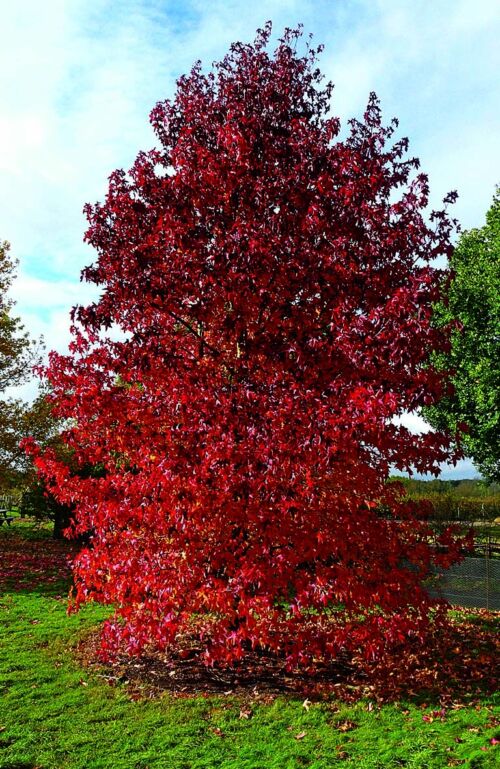
A pyramidal specimen tree with an upright broad growth habit. Green, star-shaped leaves over summer turn dark crimson during autumn. Makes a superb shade or specimen tree. Grows to apx 9 x 5m Height x Width 9 x 5m Range Medium 5-10m Growth Rate Fast Plant Type Tree Shape Pyramidical Country of Origin England Similar to Consider Other Liquidambars, Acer rubrum types, Quercus coccinea or rubra, Pyrus spp. Amelanchier Canadensis, Nyssa Sylvatica - Leaf
Leaf Colour Lush Green Deciduous Leaf Colour Crimson Red - Flower
Flower Nil - Uses
Specimen Yes Good Shade Tree? Yes Accent Yes Note: Growth, height and grade information are given in good faith but are subject to natural variables beyond our control. -
Sale!Liquidambar styraciflua 'Worplesdon' is a striking deciduous tree with an upright, pyramidal habit and distinctive corky bark. Its deeply lobed, green ‘maple-like’ leaves provide lush foliage throughout spring and summer. As autumn arrives, the leaves transform into a brilliant display of fiery red, orange, and yellow making it a true seasonal highlight. Thanks to its form and colour, this variety is excellent for avenue planting, as a shade tree specimen, or as a feature in small gardens. Ideally, it prefers a sheltered position with moist, well-drained soil conditions. At maturity, it typically reaches around 6 metres tall by 4 metres wide, offering structure without overwhelming the space. Interestingly, the Latin name styraciflua refers to its gum-producing nature.
- 6 x 4m
- Medium 5-10m
- Fast
- Tree
- Round
- North America/div>
- Other Liquidambars, Acer rubrum types, Quercus coccinea or rubra, Pyrus Aristocrat or Bradford. Amelanchier Canadensis, Nyssa Sylvatica, Liriodendron Tulipefera, Platanus Autumn Glory.
- Green
- Reds, Oranges and Yellows
- Moist well drained
- Prefers sheltered
-
- Description
A magnificent, large, deciduous tree with a straight trunk and corky bark. Eventually forms a broadly conical crown. Narrow and erect when young, the tree develops an oblong to rounded crown at maturity. Green leaves over summer turn yellows, reds, purples and oranges in autumn. Height x Width 7 x 5 Height Range Medium 5-10m Growth Rate Fast Plant Type Tree Shape Round Country of Origin North America Similar to Consider Other Liquidambars, Acer rubrum types, Quercus coccinea or rubra, Pyrus spp. Amelanchier Canadensis, Nyssa Sylvatica - Leaf
Leaf Colour Green Deciduous Leaf Colour Orange. Yellow, Red, Green - Flower
Flower Nil - Uses
Specimen Yes Good Shade Tree? Yes Note: Growth, height and grade information are given in good faith but are subject to natural variables beyond our control. -
- Description
A very upright form of liriodendron tulipifera with a columnar growth habit. Unusual, green lyre-shaped leaves turn butter yellow in autumn. Fragrant, tulip like flowers appear late spring which are a greenish yellow with an orange band at base. Adaptable to clay soil, though best suited to well-drained conditions to avoid excessive moisture. Height x Width 8 x 3 Height Range Medium 5-10m Growth Rate Fast Plant Type Tree Shape / Habit Upright Country of Origin North America Similar to Consider Quercus Robur Fastigiata, Carpinus betulus Fastigiata, Acer Bowhall, Platanus acerifolia pyramidalis. Betula var. Cupressus totem, Olea El Greco, Knightia Excelsa, Poplar crow’s nest, Ginkgo fastigiata. - Leaf
Leaf Colour Green Deciduous Leaf Colour Yellow - Flower
Flower Colour Green-Yellow Fragrant? No - Uses
Specimen Yes Small Garden Yes Note: Growth, height and grade information are given in good faith but are subject to natural variables beyond our control. -
Yulan Magnolia - Magnolia denudata - is a moderately fast-growing tree with a rounded, dense canopy. Throughout summer, its large, dull green leaves provide lush coverage, gradually transforming into golden-yellow hues as autumn arrives. Then, in late winter to early spring, the tree bursts into bloom with pure white, goblet-shaped flowers that emit a delicate lemon scent. These blossoms appear on bare branches, creating a truly spectacular display. Originally from China, the name "Yulan" translates to "jade orchid" or "jade lily," symbolizing purity and elegance. Moreover, this tree prefers moist, well-drained soil in a sunny position, making it both resilient and easy to care for. Due to its smaller size, it is especially suitable as a feature tree in compact gardens or urban landscapes. Typically, it grows to approximately 5 metres tall and 3 metres wide.
-
Magnolia grandiflora ‘Little Gem’ is a compact evergreen tree originating from the USA. With its rounded form and slower growth, it provides year‑round structure and elegance in the garden. The glossy deep green leaves, highlighted by russet undersides, are typical of grandiflora magnolias. Moreover, creamy white flowers appear freely from an early age, filling the air with fragrance and charm. This magnolia tolerates clay soils; however, avoid overly wet conditions. In addition, it grows to approximately 5m tall by 3m wide but can be pruned easily to maintain shape and height. Because of its size and adaptability, ‘Little Gem’ is excellent for smaller gardens or large pots, offering beauty and versatility in both traditional and modern landscapes
-
Malus floribunda, commonly known as the Japanese Crabapple, is a moderately fast-growing ornamental tree with its origins in Japan. With long, gracefully arching branches and small, dark green leaves, it brings elegance and seasonal interest to any garden. As spring arrives, the entire tree bursts into colour with bright pink buds that open into a profusion of small white to pale pink flowers. Shortly after flowering, yellow fruits flushed with red begin to appear. These fruits are not only edible but also attract birds, adding life and movement to the garden. Interestingly, the Latin name floribunda means “flowering freely” or “many-flowering,” perfectly describing this tree’s abundant spring display. Because of its compact size, reaching approximately 3 x 2.5 metres, it’s an excellent choice for smaller gardens, courtyards, or decorative planting schemes. Furthermore, it responds well to pruning, making it easy to maintain a neat and tidy shape.